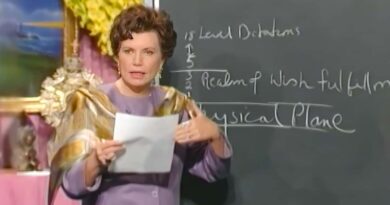
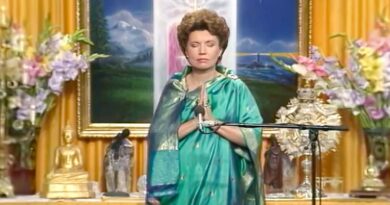
Lecture on the Life and Teachings of Padma Sambhava – August 23, 1994
Lecture on the Life and Teachings
of Padma Sambhava
August 23, 1994
LECTURE TRANSCRIPT:
INVOCATION:
O Lord Padma Sambhava, let thy wisdom quicken our crown chakras. Place thy presence over us each one thatwe might drink the nectar of the Lotus-Born One. Come into our hearts. Let us enter your heart. Bring to ourmemory the forgotten pages of our oneness with thee, O Padma Sambhava.
In the name Gautama Buddha, Lord Maitreya, Manjushri, Sanat Kumara, Lord Jesus Christ, O Padma Sambhava,quicken our chakras, open the gates to our temples, purify us in all levels of being that we might be thy chalice forthe dispelling of world misery, poverty, war, famine.
O God, let thy light shine through us as the great beacon of the I AM THAT I AM. From the beginning unto theending, deliver us that we might serve all souls, that we might invoke healing, oneness and wholeness especiallyfor the little children, the unborn and the aborted, O God. Padma Sambhava and all hosts of Light, heal their pain,heal their souls.
Angels, Seven Mighty Archangels, we ask you to minister unto all life and that we might be an open door for theteaching of the dharma, for the spreading of the dharma. We thank thee, O God, in the name Avalokitesvara KuanYin.
We call forth light for the defense of Tibet and her people, the Dalai Lama and all those who have suffered theburden of the destruction of their villages, their temples, and the desecration of monks and nuns. From the GreatCentral Sun let light descend and let all people of earth receive enlightenment in this age of the Kali Yuga.
In the name Gautama Buddha we celebrate this hour as communion with our Lord Padma Sambhava. In the nameof the Father, the Son, the Holy Spirit and the Divine Mother, Amen.
Good evening, everyone. Won’t you be seated.
LECTURE:
It is an hour in the day when we turn our attention to Padma Sambhava, the Lotus-Born One, his sponsorship of our Community, his life and some of his teachings. So I will review these for you and you are welcome to take notes.
First of all, we remember that Padma Sambhava is revered as the founder of Tibetan Buddhism. He is known as the “Precious Guru,” and to us he is indeed most precious. His name means literally “Lotus-Born One.” His followers venerate him as the “second Buddha.” He comes in the lineage of Gautama Buddha.
Although much of Padma Sambhava’s life and work are obscured in legend, narratives of his life give the following profile. He lived in the eighth century. It was a period much like our own today of darkness and turmoil. At that time he was the foremost scholar at the famous monastic university, Nalanda, India. He was renowned for his mystical powers, mastery of the occult sciences, especially for his knowledge and application of dharani. Dharani are mystical sentences, mystical sentences. He also had a great command of worldly knowledge, from languages and fine arts to the earth sciences and architecture.
In about 750 a.d., the Tibetan king Trisong Detsen invited Padma Sambhava to come to Tibet. The king asked him to overcome the forces of the entrenched Bon religion, B-o-n, that were opposing the establishment of Buddhism by their black magic.
As Padma Sambhava approached the country, he was confronted by demons and evil spirits. He subdued and converted them into protectors of the Dharma. He expects us to do the same when we are confronted by demons and evil spirits, to convert them, to turn them inside out where they were once servants of Darkness, they are servants of Light. When we call upon the name of Padma Sambhava and we give his mantra, so he works through us according to God’s will.
Padma Sambhava also exorcised the demons that were preventing the building of the first Buddhist monastery in Tibet, known as Samye. Padma Sambhava then oversaw the completion of Samye, a monumental monastery with an elaborate complex of temples designed in the form of a mandala. At Samye he also founded the first community of Tibetan Buddhist monks.
Padma Sambhava brought an age of great enlightenment to Tibet. Thus we call upon him to infill us with that enlightenment that we might bring enlightenment to the people of our time. We have not very far to look to see the burdens of children, of our youth throughout the West, to see the burdens in Africa. Our hearts are burdened as we see the news, as we read the news and we understand how so many suffer because they have not received an understanding of the inner Light of their own being, of what the great Buddhas, the Lord Jesus Christ, Confucius have taught us down through the centuries from the earliest beginnings of Hinduism, understanding that the Atman lives within us, that there is a fire within our hearts that is a spiritual fire that gives us eternal life.
Padma Sambhava knew that his teaching would be for the centuries that descended after his departure. And these great teachings have come to us in many forms, especially through the dictations of the Ascended Masters from the heart of our beloved Saint Germain. So Padma Sambhava working with Saint Germain brought to us the violet flame for transmutation of all of the sorrow and the dying and the disease and the last plagues of our time.
As we come to the conclusion of this Summit University quarter, we are so grateful that we can commune at this beautiful place and that we can drink in the nectar of the teachings of the Buddhas and the Christed ones of all ages and by that we can contribute to the alleviation of humanity’s suffering.
Padma Sambhava traveled throughout Tibet, converting many to the path of the Buddha. He did not stay in one place nor should we. We must be speaking the word of the Buddha of consolation and the way of the understanding, even as we worship Jesus Christ in the lineage of the great Buddhas. And so when Jesus spoke about my Father, he was speaking of Lord Maitreya, he was speaking of his Guru. He was speaking of the great teaching he brought out of the East, having been there for seventeen years as a student.
The great wonderful perception that God has given to us is that all true religions are one and that the Spirit of God abides in all people. From that beginning we can expand and expand as well as expound on this great light that is a part of each one.
Padma Sambhava revealed the mantra teachings of the Vajrayana. The Vajrayana is the Diamond Vehicle or Path. It is a school of Buddhism. One of its central practices is the empowerment of a disciple by his guru through certain practices and rituals, including reciting mantras. Here we also love to recite our mantras. Mantras are precious jewels. They are precious chalous, chalices. The chalice of the mantra is transferred to your chakras, the sounding and the intoning of the Om and the Om Mani Padma Hum.
Padma Sambhava initiated a circle of twenty-five disciples. He was a great scholar, a great teacher and a great Buddha and yet he only initiated twenty-five disciples. This tells us that there are major challenges that we must deal with if we want to be initiated by an Ascended Master or by a living Buddha if we find one. These twenty-five disciples of Padma Sambhava became adepts and transmitters of the teachings.
Because the Tibetan people were not yet ready to receive the essence of Padma Sambhava’s highest teachings, the Master and his disciples preserved them in an abbreviated, codified form that could be deciphered only by those who had been properly prepared. These scriptures are called termas, meaning literally “treasures.” And they are treasures, for in them we discover the treasure of our own eternal life.
Padma Sambhava and his disciples concealed the termas where they would be safe until the time should come for them to be revealed. Padma Sambhava predicted that his twenty-five disciples would reembody as tertons, meaning literally “revealers of treasure,” to discover and interpret these esoteric teachings.
We know and understand that these esoteric teachings have been released gradually since the eighth century down to the very present. And the culmination of those teachings is the realization that Jesus Christ came to teach us that we almust, we also must realize the Christ within ourselves. Realizing that Christ Presence, that infinite Light within our temples, we then can enter the Aquarian age and the Aquarian age violet flame that Saint Germain revealed.
According to other traditions, the most prominent tertons are incarnations of Padma Sambhava himself. Tibetan Buddhists believe that starting in the eleventh century and continuing, tertons began to recover and expound upon these termas.
Before he left Tibet, Padma Sambhava instructed the king and people for twenty-one days in the outer and inner teachings. He also taught them principles of law, farming, enlightened government, and he exhorted them to pursue the path to Buddhahood.
With this accomplished, legend says he mounted a magnificent winged horse and, surrounded by rainbow light, rose upward into the heavens. According to tradition, he flew to the land of the rakshasas. These are cannibal demons. He liberated them and now resides there in his paradise, his “pure land,” on the Copper-Colored Mountain.
Some of the termas that were discovered contain prophecies made by Padma Sambhava concerning the future of Tibet which we have seen outplayed in our own lifetime. These include prophecies of the Chinese Communist invasion of Tibet, the destruction of monasteries, the desecration of sacred scriptures, statues and paintings, the degradation and violation of monks and nuns, the slaying of Tibetan people.
All of us bear the burden that has come upon the Tibetan people and the Dalai Lama. For we understand the meaning of community and that community has existed in all past ages even beyond known history and that the Buddha has always been cradled by community and the monks and nuns fortified. Nations have been held and wars have been prevented because devotees have assembled to offer prayers and invocations. Today communities are suspect in many nations of the world. And those of outer persuasions who are only of the intellect and not of the heart do not appreciate the value, the great value of the recitation of mantra and the raising of the sacred fire on the spinal altar and the increasing of the light in the chakras through mantra.
Among the best-known termas is the biography of the Precious Guru, written by his chief disciple, Yeshe Tsogyal, his female disciple. In Yeshe’s work, the Precious Guru predicts that the teaching of the Buddha will eventually decline until the incarnation of the next Buddha, “Maitreya the Conqueror,” who will “make many minds apply themselves to virtue.” Hence this Community is called Maitreya’s Mystery School. Here we learn the mysteries of East and West, we apply them, we internalize them until we are able to live them, demonstrate them and then teach them.
I feel especially close to Padma Sambhava because, as do you, because it was he who placed the mantle upon me so many years ago and gave me the name “Guru Ma.” This name means the Teacher who is mother, the Teacher who worships the Divine Mother. And so, all of us together in the great circle of Padma Sambhava desire to mirror the Divine Mother to the world, for the age of Aquarius is the time of the return of the Divine Mother. And in the coming of the Divine Mother, men, women, children, people of all races and ages will have to, returned to them the precious element of the Mother Flame.
The absence of that Mother, her desecration on Lemuria, the absence of the realization of feminine aspects of ourselves have left a very vacant and lonely spot in all people in earth. And so insofar as we preach the teaching of the Divine Mother and the Divine Feminine in this age, we in our prayers call that each one who has lost the Divine Mother might find her again and therefore complete the Trinity with the squaring of the circle of that Divine Mother
I’d like to invite you to give the mantra to Padma Sambhava. [Messenger addresses A.V. technicians.] How many of you do not know the mudras we give with this mantra? We are celebrating the Buddha in our temple and then we are giving the mudras, the hand gestures of Gautama Buddha and other Buddhas. So, for the OM AH HUM we are celebrating the crown chakra, the throat chakra and the heart chakra and so we say, OM AH HUM. [Messenger demonstrates the mudras.] So that is the sealing of the crown, the throat and the heart chakra.
Then we give the mudra, the earth touching mudra VAJRA, VAJRA, and this is when Gautama Buddha touched the earth and Mara fled and all the earth supported him in his path of enlightenment. That is the VAJRA mudra and when you give it you give it with the sense that you are infolded by Gautama Buddha, he is overshadowing you and all demons who would move against your particular divine plan flee.
The GURU is the next mudra. It is the giving mudra, the extension of teaching. This is the GURU mudra.
PADMA, PADMA is meditation with mudra hands in the lap. This forms a figure eight. It is also the sealing of the solar plexus.
SIDDHI, this is a very important mudra. It’s the fearlessness mudra. If you have to stand before a small audience or an audience of five thousand, you raise your hand in the fearlessness mudra. And as I give it, I will show you. I give it and I simply take my hand and go through the entire audience and give the release of light and that release of light removes all opposition to the delivery of the word.
You can do this at home before you ever go out to give a lecture. Whether it’s something on business or education or music or whatever topic you may be lecturing on, this fearlessness mudra is very important and I never give a lecture without giving the Padma Sambhava mudras. That’s fearlessness and the next one is HUM. HUM is the t, setting in motion the wheel of the Law. One going downward, one going upward, this is the thumb and the forefinger. And so I’m going to ask you to stand to give these mudras.
OM AH HUM VAJRA GURU PADMA SIDDHI HUM (given 50 times)
Thank you. Please be seated. We will begin when you are ready.
There are a number of books pertaining to Padma Sambhava that I recommend, chiefly The Lotus-Born: The Life Story of Padmasambhava, as it is recorded by Yeshe Tsogyal. The selections from this book, which I am sure you will want to have as your own, have to do with Padma Sambhava’s leaving, leaving Tibet and going back to India. And so his disciples ask him many questions and these questions take the form of chapters. So I would like to read to you a few of these chapters. They don’t need much exegesis, they are plain within themselves. They are quaint as well as profound. I find them extremely profound and if I read certain lines over again, it is because I am underscoring them not only in your minds but in my mind. This is chapter twenty-four.
At the time Master Padma planned to depart for the southwestern continent to tame the rakshasas, Prince Mutig Tsenpo and other kings entreated him in these words: “Master, as you intend to leave for India and will not remain here any longer, how should the Tibetan kings of future generations behave?”
Master Padma then sang this song to the kings of Tibet:
Do not think about this applying to the kings of Tibet but think about yourself. There is no one here who does not have a leadership role, whether it is the head of the household, your own business or simply the leader of your own soul. So let us take to heart these admonishments for ourselves and never mind about the kings of Tibet.
Kings of Tibet, possessors of merit,
Do not equalize your royal class with your subjects.
A king should not engage in the actions of a
commoner,
In other words, those who are responsible as leaders must take the responsibility of a certain comportment. There are things we do not do when we are on a spiritual path when we must set an example for other people. Those who lead are always expected to be better than those who follow, not better in the sense that they are over them but having greater virtues, greater humility, and a leader is always the servant of the people.
But remain with a dignified and balanced poise.
Do not lose the dignity of your Holy Christ Self. Do not lose the dignity of being a Bodhisattva.
Benevolently, ask advice from the inner cabinet ministers,
While also being decisive in tasks and speaking unrestrained.
Never be above asking anyone for advice. Remember El Morya’s axiom, “If the messenger be an ant, heed him.” Listen to what the messenger brings to you because the messengers of God always come disguised in those whom, if we have pride, we might consider to be beneath us.
Do not listen to advice that will jeopardize the country.
Don’t listen to advice that will jeopardize your fortunes, your family, your goals in life.
Be gentle and cordial and never ruthless.
Be wise when issuing a decree or giving gifts.
Do not bestow too many distinctions—be moderate.
Otherwise you will fan the pride of those who serve with you and under you. So see that there is merit before giving so many distinctions.
Ministers who are greedy and unintelligent
Pose the greatest danger of destroying the fortress of the country.
If you are in business or you are in charge of any kind of a representation of the people, if you are working in a charitable cause so, such as Doctors Without Borders and so forth, if you are working on a project and on a mission, your greatest vulnerability are the greedy and unintelligent and the greatest danger of destroying the forces of the country or the forces of your purpose.
When the ministers take control of the country,
Be very careful with funds and avoid evil deeds.
If the country degenerates, the kingdom is lost.
Do not be gullible or easily influenced.
If you are in charge of leading people, do not be gullible, do not be easily influenced. Where do you go? You go to the secret chamber of your heart. You commune with God, you kneel at your bed at night and pray and ask for divine guidance. You call to the Divine Mother. You call to the Blessed Mother of Jesus. You call for that guidance and you listen to what you receive when you awaken in the morning. If you are a leader
Ignore half of what you hear and remain undaunted.
It is ridiculous to be bowed down by gossip and rumors and all kinds of vilification whether it comes within community or through the press.
Then the kingdom ll,
Then the kingdom will last for a long time.
If out of desire for queens and other women
You grow too fond and attached,
You will be overpowered by your emotions and lose control.
The point here is if you are to lead, you must not lose control, not of your mind, your passions, your emotions or your appetites.
Do not place your trust in unreliable people.
Seek from the Holy Spirit the gift of the discernment of spirits so that immediately you have the sense in your very own soul that someone is unreliable or dishonest or about to take advantage of you or will give you much flattery so that you will come to do what they are bidding.
To do so brings no success but may cost your life.
Maintain peace with your outer servants and sustain the inner attendants with food.
Give up prejudice; be unshakable and fair toward all.
Constructing temples, shrine halls, and stupas is all of great merit,
But in the end they become the cause for misdeeds.
It is better to pay respect to the shrines that are already built.
So what is he telling us? The shrine is the temple of our body. When we keep it pure and holy, there at the point of our contact with God we worship. If we continue to build many outer buildings to the glorification of God, we soon lose the point of God that is within.
Be correct when translating the sacred Dharma.
Be decisive and hold the Buddha’s words to be authentic.
Treasure the Three Jewels as dear as your eyes…
[The Buddha, the Dharma, the Sangha.]
Be very steady and scrutinize well.
Some scholars and translators will be false and lack discernment.
Do not trust them; there is the danger of deceit.
Attacks from [evil] spirits will threaten to destroy the kingdom.
Do not be fickle but remain steadfast and dignified.
Queens, you are the foundation for the heirs to the kingdom.
Be open-minded, generous, and patient.
Maintain a good diet and cleanliness of hands and face.
Keep propriety and oversee your possessions.
Avoid distraction[s] and bridle your conduct.
Do not talk excessively but with a gentle and courteous manner.
Take care of your outer and inner attendants nicely and with grace.
Bring your children and consorts to the Dharma.
When pious in this life you will attain the realms of gods and humans in the following [life].
I, Padmakara, am now taking leave,
Whether you live in the present or will appear in the future,
Keep this in your hearts, kings of Tibet.
It is very sweet teaching but very profound.
Kawa Paltsek, Chokro Lui Gyaltsen, and other Tibetan Dharma teachers then asked, “Master, as you intend to leave for India and will not remain here any longer, how should the Tibetan Dharma teachers of future generations behave?”
So these are the Dharma teachers. As we are all leaders in some capacity, so we are all teachers in some capacity even if we are teaching our souls.
Spiritual teachers of Tibet who are educated and endowed with good qualities
You should carefully study reading and writing, listen to teachings, and reflect upon them
In the presence of a learned and accomplished master.
Thoroughly train in all the teachings of the different vehicles,
The Tripitaka and the outer and inner Secret Mantra.
The secret mantra is the Vajrayana or Tantric teachings and the Tripitaka is collections of teachings of the Buddha.
Train also adequately in the five sciences
In order to study all the topics of knowledge.
When you become an object of other people’s respect
And get involved in the distraction of meritorious deeds,
Abandon pride, conceit, and jealousy
And do not engage in acts of self-aggrandizement.
Act according to the words that you preach.
[Condect,] Conduct yourself according to the Dharma and in harmony with all people.
Cast away the misdeed of envy, [the misdeed of envy,]
Envy therefore is not only a state of consciousness, it is a deed according to ka, Padma Sambhava. He is telling us when we envy, as Jesus said, when we lust, if we lust after a woman, we have already committed adultery. Padma Sambhava is saying if we contain envy in our hearts, then that envy will turn into misdeeds.
[Do not] declar[e] “I am learned and he is not.”
Such a statement Padma considers to be envy.
Teach whoever wants to learn
The particular Dharma teaching of his interest.
Serve your master and teachers
With respectful body, speech, and mind.
Offer whatever you possess, wealth, food, and so forth.
Do not brag about your Dharma practice,
But ask and depend on those who are learned.
Do not pretend greatness, booming like an empty drum.
Instead, be full of the virtues of the Dharma.
Give up rivalry with your Dharma friends.
When you have acquired even the tiniest bit of knowledge,
Do not be conceited and ambitious,
Since the main point is to cherish everyone withcompassion.
Don the armor of the four immeasurables.
Unless you tame your mind with the Dharma,
How can you possibly tame the minds of others?
Be learned and control your emotions.
I, Padmakara, am now taking leave,
Whether you live in the present or will appear in the future,
Dharma teachers of future generations, keep this in your hearts.
The four he spoke of are love, compassion, joy and impartiality. Don’t prefer one over another but prefer to commune with the Buddha of the heart of each one. Commune with the Buddha Mind as we learned from Bodhidharma yesterday, excuse me, Sunday.
This is the next teaching.
Trükshig of Nyang and other Tibetan yogis then asked [the Master,] “Master, as you intend to leave for India and will not remain here any longer, how should the Tibetan yogis of future generations behave?”
Master Padma replied:
Listen here, Tibetan yogis endowed with the confidence of view and meditation.
So now you are all yogis and yoginis. Please take this teaching to heart. It is not alone for the people of Tibet.
The real yogi is your unfabricated innate nature.
You did not create it. It is unfabricated. It is innate. It is the Buddha nature.
“Yogi” means to realize the wisdom of pure awareness.
[This] is how you truly obtain the name yogi.
Be free from ambition in the view; do not indulge in partiality [preferring one over another when all are blessed with the divine spark].
Be free from reference point in the meditation; do not indulge in fixating your mind.
Be free from accepting and rejecting in the conduct; do not indulge in clinging to a self.
Yourself or anyone’s self. Don’t cling to other selves. Cling to your Great God Self.
Be free from abandonment and attain…in the fruition; do not indulge in grasping to things as real.
Things are not real. Then why should we engage in the lust after things?
Be free from limitation in keeping samaya; do not indulge in fraud and pretense.
[Samaya, commitment not to stray from your practice.]
Be free from bias toward the Buddhadharma
[the teachings of the Buddha];
do not indulge in scholastic sectarianism.
Appearances are delusion[s]; do not indulge in ordinariness, [ordinariness].
Don’t be ordinary but determine to excel. Be extraordinary. Be extraordinary in being the chalice of the Buddha. Be an extraordinary person in effacing the self so the Buddha can enter your temple. What is extraordinary about you but the Buddha who lives within you, certainly not the outer personality.
Food is merely to sustain your life-force; do not grovel for food.
Wealth is illusory; do not indulge in craving.
Clothes are to protect you from cold; do not indulge in opulent fashions.
Equality is nondual; do not indulge in intimate companions.
Be free from preference to country; do not indulge in a homeland.
Make your dwelling an empty cave; do not indulge in [a] monastic life.
Do your practice in solitude; do not indulge in social gatherings.
Be detached and free from clinging; do not indulge in attachment.
Be a self-liberated yogi;
Just as Gautama Buddha said to his disciples, “Be a lamp unto yourself.” Do not seek another’s lamp.
Be a self-liberated yogi; do not indulge in charlatanism.
I, Padmakara, am now taking leave,
Whether you live in the present or will appear in the future,
Tibetan yogis [and yoginis] of future generations, keep this in your hearts.
Rinchen Drag of Nyo and other Tibetan laymen then asked, “Master, as you intend to leave for India and will not remain here any longer, how should the Tibetan men of future generations behave?”
This is the men of future generations, those embodying the masculine ray of the Godhead.
Master Padma replied:
Old and young Tibetan men of future generations,
Keep the laws of the king sacrosanct.
[As Jesus said, “Render unto Caesar.”]
Keep the decrees of the ruler inviolate.
Without losing your individual needs,
Guard the general welfare of others with your lives.
[Be the protectors of your communities.]
Do not take an oath in vain.
Be strict about what is prohibited.
Be in agreement when you assemble.
Do not show disdain for the destitute.
Discuss in groups to avoid future regrets.
If you discuss in groups, then more than one person has heard you and therefore what you have said can be verified.
First, let the wise people give advise.
Keep integrity…be dependable.
Be dependable with your word. If you make a commitment, keep it. If you make a promise, keep it. Don’t make any commitments or any promises that you might not be able to keep. This is a great teaching given to me by El Morya many years ago and I find that when I have given my word, the word is so loud within me that I must fulfill that word. It becomes an all-consuming desire. So when you give your word, make sure that you keep it.
Keep integrity and be dependable.
Follow the advice of those who can think well.
We all admire people who have good minds and give us good advice.
Let the courageous lead the army.
Furnish the soldiers with weaponry.
Let attendants keep guard at night.
Appoint your servants by turn.
This is not a teaching of pacifism but the principles handed down from Lord Krishna to Arjuna, “Never the Spirit was born; the Spirit shall cease to be never, dead though the house of it seems.” And with that simple saying Krishna made Arjuna realize that he must fulfill his caste in defending virtue and casting out evil.
When people trust you, do not disappoint them.
At this particular moment in my life I look into the eyes of my little boy and I see his ultimate and utter trust. And whether it is this tiny little baby or anyone in the whole world, I believe one of the greatest sins one can commit is to not fulfill the trust. When we are trusted, we must not depoint, we must not disappoint those who trust us. We must fulfill their highest expectations because only then will they take the example and also know and be trustworthy.
Since men are more wise,
I am not sure if this means than women, [laughter]
They will achieve wealth, property, and fame.
If you allow your offspring to be learned in Dharma
Wealth will always increase.
Whatever you do, first think well.
To act without forethought creates many problems.
None of us here is without that experience.
When something can be corrected,
What is the use of remaining displeased?
When something cannot be changed,
Why harbor ill-will?
Either way, keep calm and centered.
If you progress slowly, at some point you will arrive.
If you circumvent places of danger, you will not be harmed by enemies.
If you speak gently, everyone will understand.
Loud and harsh orders have only short term effect.
If you act diligently anything can be accomplished.
Being rash and inconstant only makes you tired.
[Practice the suplime dharmba]
Practice the sublime Dharma for the sake of this life and the next.
That will engender permanent benefit.
I, Padmakara, am now taking leave,
Whether you live in the present or will appear in the future,
Tibetan men of future generations, keep this in your hearts.
Lady Jangchubma of Drom and other Tibetan women then asked, “Master, as you intend to leave for India and will not remain here any longer, how should the Tibetan women of future generations behave?”
Master Padma replied:
Women, source of existence,
Remember the words of Jesus, those that are quoted in The Lost Years of Jesus, women, the mother of the universe. So Padma says,
Women, source of existence,
You are the basis for the home, so keep the house tidy.
That means tidy thoughts, tidy feelings, purity in your heart, uplifting and elevating your children, your spouse.
You are the origin of life, so let your offspring embrace the Dharma.
You are the support for the body, so appreciate your husbands.
A good husband is like one’s heart, so respect what he says.
Do not marry a man whose wisdom you cannot respect. Always be certain that you can respect the man you marry because you are required to respect him all of your life.
A bad husband is your karmic residual, so give him what he wishes and do not be contemptuous.
A bad kar, a bad husband is your karma. A good husband is like one’s heart so respect what he says.
In-laws are like your parents, so offer them respect.
Your husband’s male relatives are like your father and brothers, so rear them with food and modesty.
Sisters-in-law are only with you briefly, so servethem well.
The scorn of others will be upon yourself, so face everyone with a smile.
Is Padma saying that the scorn is always upon women and therefore women should simply recognize that and face all things with a smile?
If you are short-tempered or arrogant, servants will always be few.
Appearances may arise as enemies, so always remain cheerful.
A talkative woman is a nuisance, so do not be toofond of gossip.
Praise and respect your father and brothers and be modest and noble-minded.
You provide the provisions for sons and husbands,so be generous to travelers.
Sustain servants and family with meals and be affectionate. [That’s very important.]
Do not be too miserly with your wealth; instead share the food generously.
Show a clear and smiling face and keep strict cleanliness.
Go to sleep late at night and rise early in the morning. [laughter]
Guess who gets to do all the work? [laughter]
[Be diligent] Be diligent at the seasonal farm work and do not procrastinate.
Foster cattle, watchdogs, and servants with compassion.
Spend as much as you can on virtue.
Thus you will be blessed in this life and have happiness in the following.
I, Padmakara, am now taking leave,
Whether you live in the present or will appear in the future,
Tibetan women of future generations, keep this in your hearts.
Master Padma then gave his general testament to the Tibetan people of future generations.
This is all people of the world because all souls of Tibet eventually reincarnate everywhere on the planet as do all of us.
Kings, ministers, and people of Tibet, the primitive borderland,
You are a race of red-faced demons lacking compassion and goodwill.
Your father’s race is a monkey with little modesty or shame,
And your mother’s race is a rock demoness, quarrelsome and hostile to the Dharma.
You are a race of beastly people, full of craving toward wealth.
Unless you practice virtue you will fall to the lower realms in the next life.
Do not forget that life flickers by and then you die.
What meets must part, so do not fight and cause strife.
What is gathered must be abandoned, so do not crave intemperately for wealth.
Attachment is bondage, so do not harbor unbridled clinging.
What is born must die, so think of your next life.
This is what most people in the West never think of. Most people are shocked that anyone dies whether it’s presidents or movie stars or everyday people. It’s almost as thif in a childlike way or in a juvenile way Americans do not think or plan for death. Yet the great Tibetan Book of the Dead, the understanding of preparing for the next life is very much on the mind of Buddhists and Hindus.
The concept of karma keeps many peoples of the East in line, those who are sincere, those who truly love God. But here in the West people do not count on death much less give consideration of their deeds of today affecting their next life because the councils of Christianity have denied them the teaching of reincarnation. So it’s eat, drink and be merry, for tomorrow you die. And that is not the philosophy of the sons of God but of the fallen angels.
So it’s a tragic thing today, very tragic, to think that sins are wiped away and we are received into the kingdom to the heart of Jesus only because we have confessed our faith but not because we have balanced karma or done good works or served the people.
The most sinful goes to hell; who can bear that?
Through greed you are reborn a hungry ghost and will suffer hunger and thirst.
By rejecting the Dharma you become an animal; keep that in mind.
Of course the Eastern teaching on reincarnation is that we may come back as animals. That is a doctrine you can consider and observe. My observations of this doctrine are that if someone has such heavy and dark karma, God rather than canceling out his soul or his lot may give him the opportunity to be in the body of a horse or a cow or whatever and therefore have time ou, time out to start with the basics, to graze in the pastures, to be limited in his ability to work evil deeds because this individual has done so much evil.
So being in the body of an animal we are limited, and most animals spend all of their time seeking food and shelter. So if this doctrine is a true doctrine, it ga, it gives to us the extended mercy of God when even the darkest soul who have committed unthinkable crimes and mass murders could be put in the body of an animal perhaps for many lifetimes until they would be ready to deal with the balancing of the karma they have made. It makes more sense to me than God simply tossing someone who has committed a crime into hell forever. That does not sound to me like the act of a loving God.
This life is only on loan; no one knows when it will be lost.
When I have spoken about the issues of abortion, I have always reminded women that they do not own their bodies. Their bodies were created by God. They did not create them. All of our bodies are on loan. The Lord giveth, the Lord taketh away. Blessed be the name of the Lord. So when people say that women have choice to decide whether to kill the fetus in the womb or to give birth to it, they are forgetting that their body is not their own. It is God’s body. It is the temple of the living God.
Appearances are illusory, understand their impermanence.
Food and wealth are like dew drops; it is uncertain when they disappear.
Remember that servants are like travelers you meet on the road.
Enmity is delusion; understand it to be mistaken.
Keep in mind that family ties are the guide to samsara.
Family ties get us locked in the round of rebirth. This wisdom tells us why Jesus said, Who are my father, who are my mother, who are my brothers and sisters? when they pointed that his family were waiting for them. And he said, My family are those who do the will of God. So if you nite, if you unite with those who do the will of God and yet maintain love, compassion and all of the honor and respect due the family, you are disconnecting your ties to the karma of that particular family situation, of that particular life.
Understand that offspring are only karmic creditors claiming their due.
I love this line. People say, why did I have such a child? I meet people all the time, they may have wonderful children, they may have children that are very difficult and they never think about the fact that God sends you your creditors clay, claiming their due. So children are coming into your household to claim what is due them, the karma you have made with them in past lives.
Your life runs out while spending it on idle talk;
[Isn’t that true?]
Do you not notice the arrival of King Yama’s scouts?
Listen to me, Tibetan people, you red-faced demons, [laughter]
Seek the three jewels as escorts against the three lower realms.
Take the guru, yidam, and dakini as your support in both this and future lives.
Yidam means “personal deity, your guide to enlightenment.” Dakini is a female deity.
As the road to freedom, practice the view, meditation, and conduct.
I am hearing my baby. He will wait a little bit longer.
Accept the Great Compassionate One as the destined deity of Tibet.
And that is the Avalokitesvara Kuan Yin. And remember we have this little card that has her mantra on it. You always have recourse to Kuan Yin.
Forsake the ten nonvirtues and adopt the ten virtues.
If you act like this you will have happiness in this life and further happiness in the next.
I, Padmakara, am now taking leave,
Whether you live in the present or will appear in the future,
All people of Tibet in general, keep this in your hearts.
This is the teaching on OM MANI PADME HUM. It is brief and actually very enlightening.
Master Padma told King Mutig of Tibet and the close disciples, “Listen, king of Tibet, nobility and subjects! OM MANI PADME HUM is the quintessence of the Great Compassionate One, so the merit of uttering it just once is incalculable….
OM MANI PADME HUNG. It is possible to count the number of raindrops falling during twelve years of monsoon, but the merit of uttering the Six Syllables just once cannot be counted. It is possible to count all the grains sown on the four continents, but the merit of uttering the Six Syllables just once cannot be counted. It is possible to count the drops of water in the great ocean, one by one, but the merit of uttering the Six Syllables just once cannot be counted. It is possible to count each hair on the bodies of all animal in existence, but the merit of uttering the Six Syllables just once cannot be counted….
OM MANI PADME HUNG. These six syllables are the quintessence of the mind of noble Avalokiteshvara. If you recite this mantra 108 times a day, you will not take rebirth in the three lower realms. In the following life you will attain a human body and in actuality you will have a vision of noble Avalokiteshvara. If you recite daily the mantra correctly twenty-one times, you will be intelligent and able to retain whatever you learn. You will have a melodious voce and become adept in the meaning of all the Buddhadharma.
I want you to know that I absolutely believe with profound conviction what I am reading to you. This is not just sing-song teaching because the mantra is the formula, th, the geometric formula or mandala that locks you into the heart of Kuan Yin. And Kuan Yin is the great one who is the overseeing, [laughter] I am hearing this baby, the overseeing presence of Tibet, the Great Compassionate One.
When someone is afflicted by disease or an evil influence, compared to any mundane ritual of healing or of repelling obstacles, the merit of the Six Syllables is much more effective for warding off obstacles or disease. Compared to any medical treatment or cure, the Six Syllables are the strongest remedy against sickness and evil.
The virtues of the Six Syllables are immeasurable and cannot be fully described even by the buddhas of the three times. Why is that? It is because this mantra is the quintessence of the mind of the noble bodhisattva Avalokiteshvara, [who is Kuan Yin] who continuously looks upon the six classes of sentient beings with compassion. Thus, recitation of this mantra liberates all beings from samsara [that is, from the realms of rebirth].
Kings and disciples of future generations,
Take the Great Compassionate One as your yidam.
Recite the Six Syllables as the essence mantra.
Be free from the fear of going to the lower realms.
Avalokiteshvara is the destined deity of Tibet,
So supplicate him with faith and devotion.
You will receive blessings and attainments
And be free from doubt and hesitation.
To the knowledge of me, Padmakara,
A teaching more profound and more swift
Has never been taught by the buddhas of the three times.
I, Padmasambhava, am now taking leave.
Keep this in your hearts,
Tibetan followers, kings, and disciples,
Who are present now or will appear in the future.
Upon hearing Master Padma’s word, the king of Tibet and the close disciples were all overjoyed and paid homage to the master, prostrating themselves to the ground.
So this is the end of reading today in the heart of Padma Sambhava. [28-second standing ovation] Thank you.
I bow to the light within you and I am grateful for your presence. God bless you. [responses; 10-second standing ovation]
END
This lecture on the Life and Teachings of Padma Sambhava was given by Elizabeth Clare Prophet at the Summit University Summer Session 1994, Jesus Christ and Mighty Victory on August 23, 1994 at King Arthur’s Court, Royal Teton Ranch Montana.
Who is Padma Sambhava
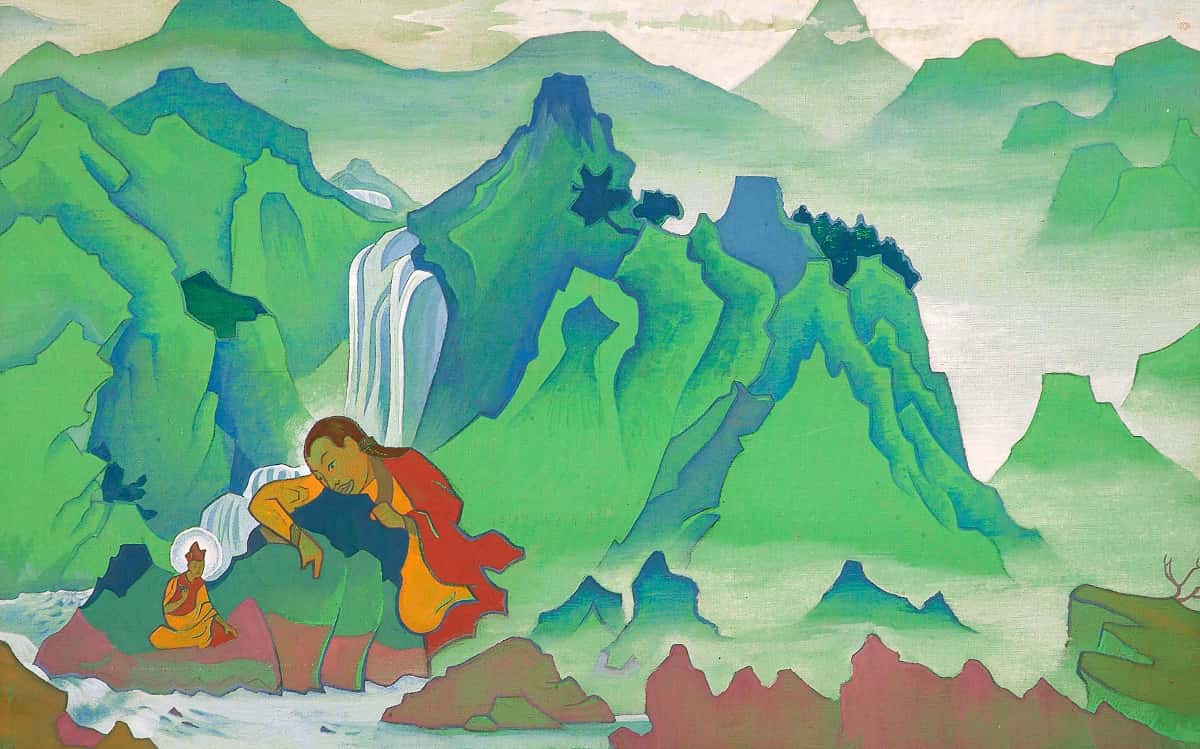
Padma Sambhava is revered throughout the Himalayan countries as the “Precious Guru.” He is the founder of Tibetan Buddhism, and his followers venerate him as the “second Buddha.”
Padma Sambhava’s life
Padma Sambhava’s name means “Lotus-Born One.” Although much of his life and work is obscured in legend, he is said to have been the foremost scholar at the famous monastic university in Nalanda, India, in the eighth century A.D. He was renowned for his mystical powers and mastery of the occult sciences—especially for his knowledge and application of dharani (“mystical sentences”). He also had a great command of worldly knowledge, from languages and fine arts to the earth sciences and architecture.
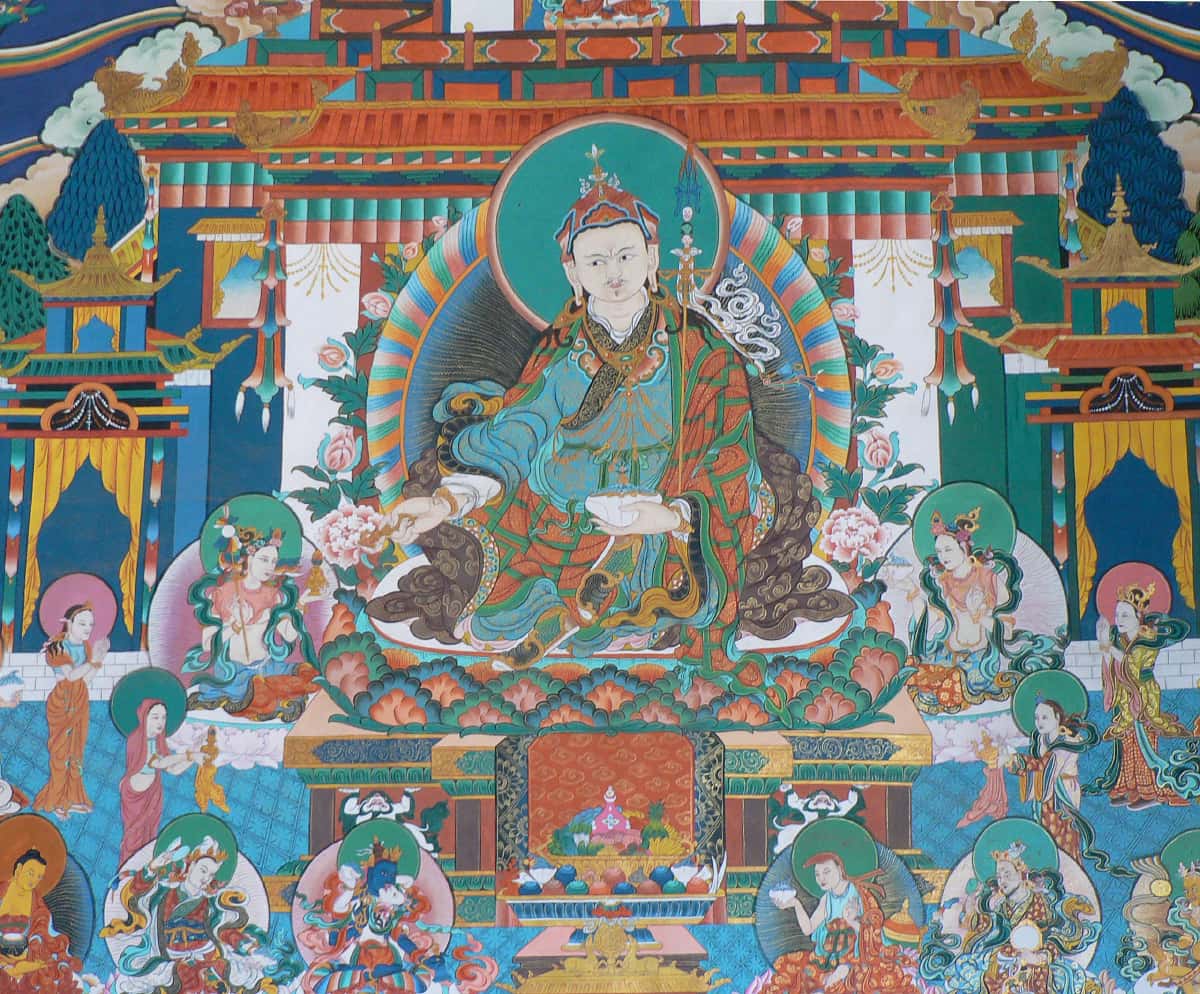 In about 750 A.D., the Tibetan king Trisong Detsen invited Padma Sambhava to come to Tibet. There he helped establish Buddhism by overcoming the forces of the entrenched Bon religion. He exorcised the demons that were preventing the building of the first Buddhist monastery in Tibet, the great monastery of Samye, located outside of Lhasa. Padma Sambhava then oversaw the completion of this monumental monastery with its elaborate complex of temples designed in the form of a mandala. At Samye he also founded the first community of Tibetan Buddhist monks.
Padma Sambhava brought an age of great enlightenment to Tibet. Under his direction, an assembly of scholars translated Buddhist scriptures and texts into the Tibetan language, enabling Buddhism to spread throughout the country. In addition, he traveled throughout Tibet, converting many to the path of the Buddha and revealing the mantra teachings of the Vajrayana. Vajrayana is the Diamond Vehicle, or Path, a school of Buddhism prevalent in Tibet. One of its central practices is the empowerment of a disciple by his guru through certain practices and rituals, including reciting mantras.
Before Padma Sambhava left Tibet, he instructed the king and people for twenty-one days in the outer and inner teachings. He also taught them principles of law, farming and enlightened government, and he exhorted them to pursue the path of Buddhahood.
Legend says that, with this accomplished, he mounted a magnificent winged horse, and surrounded by rainbow light, rose upward into the heavens. According to tradition, he now resides in his paradise, his Pure Land, on the Copper-Colored Mountain.
LEARN MORE ABOUT PADMA SAMBHAVA
The Summit Lighthouse®
Ascended Master Library
The Gold Mine Is Here
- Over 1300 lectures by Mark and Elizabeth Clare Prophet on angels, auras, healing and more
- Over 4100 dictations by the ascended masters on the spiritual path and how to attain your mastery
- Spiritual songs to the angels, ascended masters and hierarchs of the nature kingdom, violet flame, protection and healing decree services for your devotions, chakra alignment, karma balancing, aura cleansing and anchoring peace on the planet!
- Search by ascended master, date, category and more.
The Archives
For additional information please visit the Summit Lighthouse website. Learn how to become a Keeper of the Flame.