The Buddhic Essence, The Potential to Become Buddha, Mystical Paths #28 Jul 3 1992
The Buddhic Essence, The Potential to
Become Buddha – Mystical Paths Ep. 28
July 3, 1992
LECTURE TRANSCRIPT
By this time it is apparent to you all that the mystical paths of the world’s religions are indeed converging. It is almost as though if you are to hear another re, lecture, you’re going to wonder whether it is Buddhism or Christianity or Hinduism because you are hearing the very same things. How can so much confirmation of an inner spiritual path come from so many different peoples in so many different ai, ages, of different languages, under different Manus? How can they all come to this one and single conclusion?
In this conference I desire to see you liberated from having to defend your personal experiences and beliefs based on what people think is Christianity or judid, or Judaism or Islam. I would like you to be able to take all of the threads of a single point that is made again and again in each lecture and be able to simply point out, “You are outnumbered. Hindus believe this. Buddhists believe this. Taoists believe this. Jews believe this. Christians believe this,” and so on and so forth.
It is wonderful to be able to show that not millions of people at one time but millions of people from all time and all ages have sought and realized union with God.
So we are going to look at the path that has been developed by our beloved Gautama Buddha for this discipline and this entering in.
I am going to read to you a prayer by Shantideva, an eighth-century Buddhist monk and scholar, who is revered as a bodhisattva. It has been described as a magnificent canticle of love and charity that should inspire all of you who would become the bodhisattva.
First let me tell you that the definition of the word bodhisattva in the simplest sense of the word means “disciple.” You can be called a bodhisattva from the very first moment you have turned your heart in the desire to be a chela or a disciple of Lord Gautama Buddha. So do not think that the Bodhisattva who has full attainment thereby excludes you from this circle. You are a bodhisattva from this moment on if you desire to be.
And so this is the poem that is given to those who would become the bodhisattva.
“Whatever Good I have acquired by doing all this, may I by that Merit appease and assuage all the pains and sorrows of all living beings. May I be like unto a healing drug for the sick! May I be the physician for them and also tend them till they are whole again!
“May I kill the pain of hunger and thirst by raining down food and drink. And may I myself be food and drink for the hungry and the thirsty during the intermediate aeon of famine!
“May I be an ex, may I be an inexhaustible treasure for poor creatures! May I be foremost in rendering service to them with manifold and various articles and requisites!
“I renounce my bodies, my pleasures and all my Merit in the past, present and future, so that all beings may attain the Good: I have no desire for all those things. To give up everything, that is nirvana. And my mind seeks nirvana. If I must give up everything, then it is best to bestow it upon…living beings.
“I have devoted this body to the welfare of all creatures. They may revile me all the time or bespatter me with mud. They may play with my body and mock me and make sport of me–yea, they may even slay me. I have given my body to them: why should I think of all that? They may make me do such things as bring happiness to them.
“May no one ever suffer any evil through me! If they have thoughts of anger or of friendliness towards me, may those very thoughts be the means of accomplishing all that they desire! Those persons who revile me, or do harm me, or scoff at me, may they all attain Enlightenment!
“May I be the protector of the helpless! May I be the guide of wayfarers! May I be like a boat, a bridge and a causeway for all who wish to cross a stream! May I be a lamp to all who need a lamp! May I ded, may I be a bed for all who lack a bed! May I be a slave to all who want a slave!
“May I be for all creatures the philosopher’s stone and a pot of fortune, even like unto an efficacious rite of worship and a potent medicinal herb! May I be for them the wish-fulfilling tree and the cow yielding all that one desires!”
I would like to translate a few of these concepts for you. To give up everything for nirvana we should have to draw a zero where we are standing. But the zero is really the circle of God. Giving up everything means giving up everything that is not God or of God. Our understanding of being all things to all people is an understanding that God in us can meet the needs of all whom we meet. Sometimes we don’t think so but try affirming that and see what happens.
The concept of praying that all of one’s enemies become enlightened is in itself enlightened self-interest because if your enemies become enlightened, they will no longer attack you. [laughter] It is the best prayer to make for enemies.
This prayer is the voice of the devotees of all the paths of the world’s mystical religions who so love God in his creatures that they desire to give away everything they have, including themselves. The things we cannot give away are the things with which we identify ourselves. In other words, without these things we would not feel that we had an identity.
So rather than concentrating on giving everything away, as beloved Nada told us in a dictation, she said, “I give you my love, for all else I have already given away,” rather than concentrate on what we are giving away in this life, let us concentrate on who we are. And when we realize the full identity of God in us or even more than we have in this moment, we will see that we are able to part with those things that are really props to our lesser consciousness.
God doesn’t expect us to live in a mud hut with nothing, not even utensils for cooking food. God realizes the necessity of life.
Sometimes when we read the Buddhist texts, they seem to lack an awareness of the human condition. Remember Buddhism ma, is on the crown chakra and we find that their texts are often written at an intellectual level that seems beyond the level of our ability to attain. There is a balancing factor to all that I am going to read to you.
In his Wesak address, Wesak address April 28, 1991, Gautama Buddha defended Buddhism as “the igniting of the internal being of God, the igniting of the internal being of God.”
Isn’t this why we have all come here today? We have come in the hope that somehow something inside of ourselves could be ignited because we have made a pilgrimage, because we have come to this very special place, because we sense and feel if we do not see the Ascended Masters in our midst. We are seeking to become more than we are and when we become that more, we will let go of certain things that we are that we are really not.
Gautama Buddha has told us: “You can be me and I can be you right where you are.” Just close your eyes. Recite the word Om. See the Electronic Presence of Gautama Buddha placed over you. You can even look at the visualization of the painting of Gautama. Just accept that you are the Buddha and the Buddha is you.
Om. (3x)
Now take in, now take in these teachings as you maintain the visualiza, the visualization of yourself inside the Buddha.
You have the seed of Buddha right inside of you, and because you have it, you have the potential to become a Buddha. Gautama taught this same message when he walked the earth. He was the embodied Buddha in the sixth century B.C.
Sprinkled throughout the Mahayana scriptures is Gautama’s teaching that all beings have the essence of Buddhahood. This essence, or seed, has also been called the “Buddha-nature.” Re, we read in one Buddhist text: “There exists in each living being the potential for attaining Buddhahood, called the Buddha-essence, ‘the legacy abiding within.'”
Another text, attributed to Lord Maitreya, speaks of this essence, or seed. “The road to Buddhahood is open to all. At all times have all living beings the seed of Buddhahood in them.”
After Gautama Buddha attained enlightenment under the Bo tree, he traveled throughout India for forty-five years preaching his doctrine of the Four Noble Truths, the Eightfold Path and the Middle Way. He taught his disciples to likewise devote themselves to spreading the Doctrine in order to liberate souls that they might realize the Buddha-nature within. In Mahayana Buddhism, this is called the bodhisattva ideal. It is the ideal path for you and me.
A bodhisattva is one who reaches for enlightenment not for himself but on behalf of, of a suffering humanity. Out of compassion for their plight, he vows to forego the attainment of nirvana until all beings are liberated.
Bodhisattva is a Sanskrit word, which means literally “a being of bodhi,” a being of enlightenment, “a being destined for enlightenment,” “one whose energy and power is directed toward enlightenment.”
The Path of the Bodhisattva is generally divided into ten stages, called bhumis, bhumis, b–h–u–m–i–s. These stages vary from text to text
and commentator ca, to commentator, but in each case, the bodhisattva strives to progress from one stage to the next until he obtains enlightenment.
We will be studying these stages as outlined in the Dasha-bhumika Sutra. Dasha-bhumika means “On the Ten Lands.” A sutra is a discourse of the Buddha. This sutra was translated in the third century and is considered to be the standard treatise on the ten stages.
According to one tradition, the Buddha Maitreya also dictated teachings on these ten stages to his disciple Asanga in the fourth or fifth century. As you know, Maitreya is revered by Buddhists as the “Coming Buddha” who will reign over a future age of Enlightenment. It is believed he dictated teachings to Asanga from the Tushita Heaven, where he instructs his bodhisattvas.
Those who have studied the ten bhumis have sometimes been bewildered as to how to distinguish one from another. Bhumi is a Sanskrit word, which literally means “land, earth, place, region.” Figuratively, it means “ground, plane, stage, level, state of consciousness.” It has evolved into a philosophical term meaning “stage of spiritual progress.” Bhumi.
At each bhumi, the bodhisattva practices a corresponding perfection. These ten perfections, or virtues, are called paramitas. Paramita is a Sanskrit word meaning “the highest condition or point, the best state, perfection.” Although a particular paramita is concentrated on at each stage, the bodhisattva is always working on all ten.
How does one arrive at the first stage of the Bodhisattva path? What inspires one to devote oneself exclusively to the salvation of others?
I can tell you what inspires me. And what inspires me is to know that that living God is imprisoned inside of you and that your soul is also bound because that God is imprisoned in you. And I rejoice to see the soul go free and the God Flame be unlocked so that you can literally explode into that God-free being that you really are.
This is the great joy of living. If you can’t experience helping someone unlock the God inside of himself, then what good is everything else that you might do for that person?
In Buddhist terminology, it is bodhicitta which means the “thought of enlightenment” or “will to enlightenment” or “desire for enlightenment.” Bodhicitta is also sometimes translated as “Intelligence-Heart.” It has been likened to the philosopher’s stone, which transforms the base metal of defiled thought into perfect wisdom.
The, the arousing of bodhicitta is a conversion experience, an awakening–the aspiration for enlightenment for the sake of others. It is a spiritual catalyst for total personal transformation and is thus said to turn one’s life “upside down.”
How many of you here can remember the day that suddenly you desired that enlightenment? Something came upon you and your life changed. It did turn your life upside down, didn’t it? [laughter]
Well, I go back to the time when I was eighteen and I was leaving my home for college. And I had called to God to tell me if there was something left in my home that God had placed there for me that I hadn’t taken advantage of. And God spoke to me strongly, clearly in my own mind and he told me to get that certain book of the I AM Discourses off of my mother’s shelf and to open it and read it.
I was afraid of the book. I’d been afraid of it since I was a little child. But I took the book off the shelf, settled down into an old leather chair, opened it and saw the picture of Saint Germain. It was electrifying.
I leaped out of the chair and ran to show the picture of Saint Germain to my mother and I said, “Mother, do you know him?” She said, “Yes, I know him.” And I said, “Why haven’t you ever told me about him?” She looked a little bit sheepish and she said, “Because I wanted you to discover him for yourself.” I don’t really think my mother ever wanted me to discover Saint Germain because she was not very happy after I did. [laughter]
But I want to tell you as I look back upon that record, though I didn’t realize it at the time I realize it fully now, that Saint Germain himself was there fully in his Electronic Presence. And he was calling me to my mission and he put in me an unfurled spiral, a coil of energy. And from that moment on I sought him relentlessly for five years. I had to find Saint Germain and I didn’t know that there was any such thing as an I AM activity. It took me all over the place till I finally found Saint Germain. But I mark that moment in my life as the turning around of my life.
And something else I have learned about my life of the first eighteen years, that the first eighteen years of this embodiment were a testing of my soul under very difficult circumstances in my home and surroundings. Most people I knew, and especially my parents, were a karmic challenge and a challenge from ancient times.
And I suddenly realized how I practiced chelaship under my parents, being devoted to them, obedient, not talking back, doing whatever they required me to do, et cetera, et cetera. And what Saint Germain told me not so long ago as, as I was reviewing that era of my life, he said, “If you had not passed your tests in those eighteen years, I could not have come to you on that day and initiated your mission.”
So don’t be burdened when you realize what you have gone through as a child. I speak to children and children in adult bodies. I speak to people of all ages who are still suffering from experiences of their childhood. And so often the suffering is a suffering of a sense of injustice, “Why did this have to happen to me? Why did they have to treat me that way?” and so on and so forth.
It is so important to simply accept that we have karma, that God is just and if we were done to, no doubt we did to others in previous lives and we had to learn compassion and mercy some way. And if we refuse to learn it under the Great Gurus, then we would learn it by our karma.
Understand that if you had a difficult time from your birth to your adulthood in those years, understand it this way, that God loved you so much and trusted you so much and had such confidence in you that he gave you all of that karma in the beginning so that the, by the time you finished school and were on your way you didn’t have to face that heavy karma. You would have balanced it had you behaved properly and done what you should do and come into a time when you would be more free to pursue your career and your spiritual path.
It is best to get on with life and to say, “I thank you, my God, for what you have given to me. For I know that you did judge that whatever happened to me was the best learning for my soul, the teaching I needed, what I had to grapple with so that I could become who I am.”
Let your prayer rest. Trust God. And when the images recycle, put them into the violet flame and say, “O God, I am grateful I am free.”
Please do this. I can’t tell you how often I am talking to people who somehow are stuck years and years ago‑-ten, fifteen, twenty years ago. They will tell you about what happened to them then or something that was great in their life and nothing has been great ever since. And so they’re constantly living in the past.
You need to get on with being a bodhisattva. You need to let all of this just drop from you. Let go of it. And I am going to teach you how to forgive your enemies shortly in this lecture.
Bodhicitta, remember it is Intelligence, hyphenation, Heart, Intelligence, hyphen, Heart. So it combines the crown chakra and the heart chakra. It has been likened to the philosopher’s stone which transforms the base metal of our human karma of defiled thought into perfect wisdom.
The arousing of bodhicitta is a conversion experience, an awakening‑-the aspiration for enlightenment for the sake of others. It is a spiritual catalyst for total personal transformation and, as I already said, it turns one’s life upside down.
I am glad God turned me upside down and then made me right again. Aren’t you? [9-second applause; Messenger gives instruction to A.V. personnel]
Lama Govinda says: “This miracle occurs when we first become conscious of our capacity for enlightenment.” When did you first become conscious that you had the capacity for greater enlightenment than all the teaching you’ve ever received in church and school and anywhere, that you could be filled with a greater knowledge, a knowledge that you sensed was right there but somehow you need to hav, you needed to have it transferred to you? Do you remember when you had the sense? I’ve had Ph.D.s tell me that they learned whatever the world had to teach them and that wasn’t it. You know it’s there. Let’s increase our capacity to get it.
“When for the first time the consciousness of enlightenment seizes hold of us. The flashing forth of the bodhicitta gives one’s life a new meaning…an unshakable directness toward the great goal, the great goal. The becoming aware of this spark of the bodhicitta is the beginning of the bodhisattva path.
So we don’t even realize that we became bodhisattvas perhaps long ago in this life or many lifetimes ago. We’ve come together to pick up the path.
The path brings about liberation from suffering and from the fettars, and from the fetters of egohood not by a denial of life, but by serving one’s neighbor in the course of striving for perfect enlightenment.
I can tell you that being liberated from suffering the fetters of egohood is the great liberation that has come to me as over the years I’ve heard myself spoken about and against and our Church spoken about and against in the press by all sorts of people, stories repeated abou, around the world about my life or person or this and that with the total realization that I was absolutely powerless to do anything about it and I would either go down under this or I would rise.
And there always comes to me the words of Mark Prophet which he said to me and which I have given to every one of my children. He said, “There’s one thing you can’t do in life, Elizabeth.” And I said, “What?” And he said, “You can’t make people like you.” [laughter] It’s absolutely impossible. Not any one of us can make people like us.
And so I found that the only thing that would possibly or could possibly suffer under persecution would be my ego. And watching that ego dissolve little by little like a sugar cube and realizing that none of this is touching the real me or necessarily true about the real me has been such a liberation, such a liberation that I cannot even tell you.
What is most important is that I know that in my heart, my soul and my being I am right with God and you, the Keepers of the Flame. And I have peace every single day of my life, unconcerned about whatever is being said wherever.
I invite you to enjoy this freedom of not suffering the gossip, the calumny, the condemnation and the misunderstandings of acquaintances and strangers. It’s the greatest liberation you will know for starts. [11-second applause]
When calamity comes upon you in life, when you are assailed or attacked or whatever, you have only two choices: to go down under it or to come up over it. It’s as simple as that. Either you’re going to get it or it’s going to get you. And every time I’ve faced these crossroads I’ve said to myself, “You are not going to be moved. You are not going to go down under this particular situation.”
And I believe that all of these situations come to us for a great testing of our mettle so that God knows just how much of the world we can take before he has to hold back the world because we’re not yet tough enough and strong enough and therefore able to deal with what the whole world will say about us. It’s very important to be unconcerned except with God, concerned that you are right with him.
“For when this spark shines forth in the depths of our consciousness, it initiates the process of enlightenment by transforming the latent, potential powers in us into active, all-penetrating, all-penetrating energies.”
The Buddhist philosopher Nagarjuna wrote: “One who understands the nature of the bodhicitta sees everything with a loving heart, for love is the essence of the bodhicitta. The bodhicitta is the highest essence. Therefore, all bodhisattvas find their raison d’être of existence
in this great loving heart.”
Buddhist monk and scholar Sangharakshita says: “The rising of the thought of enlightenment is the most important event that can occur in the life of a human being. As by the discovery of a priceless jewel a poor man becomes immensely rich, so with the rising of the thought of enlightenment, the devotee is transformed into a bodhisattva.
“Bodhicitta is not a phenomenon which arises once at the beginning of a bodhisattva’s career and then subsides: like a tiny spark that develops from a flame into a world-engulfing conflagration, it grows as the bodhisattva progresses.”
Likewise, the generation of bodhicitta is not an event of one day but requires long preparation in many lifetimes. Bodhicitta is believed to be inherent within all but lies dormant until nurtured by spiritual practice.
And it doesn’t matter what church or in what situation of Nature or where you have communed, whether you have sung hymns or attended this or that type of service, what matters is that you were there communing in your heart with God. And each time you would do this, no matter what the state of the consciousness of the leader or the rabbi or the minister or the priest, you and God met in that church, in that temple, in that mosque and you were pursuing him and he was pursuing you.
Likewise, the generation of bodhicitta is not an event of one day but requires long preparation in many lifetimes. Bodhicitta is believed to be inherent within all but lies dormant until nurtured by spiritual practice.
An individual may have seeds of virtue planted in his mind by hearing the teaching of a Buddha or a bodhisattva. As these seeds are tended through many lifetimes of study and spiritual practice, they grow into roots of merit. By the grace of hearing the teaching and the merit of responding to the Teacher, the person is eventually able to generate bodhicitta.
In order to develop bodhicitta, one must enter into supreme worship and gratitude, supreme worship. When you are concentrating on Lord Krishna and Lord Krishna is God, there is nothing else that can vie in your mind in that moment for your attention on that one being. That opens this tremendous stream, this stream of light whereby you direct light to Krishna and he returns it to you multiplied.
Supreme worship, as defined by Shantideva involves six practices: Giving oneself in adoration of the Buddhas, Bodhisattvas and the Dharma. Giving oneself in adoration of the Buddhas, Bodhisattvas and the Dharma. The Dharma is the way, the teaching.
Two, taking refuge in the three jewels–the Buddha, the Dharma (which is the Teaching), and the Sangha (the Community). The Buddha is the Buddha and the Buddha is also represented by the Guru. If we cannot trust the Buddha and the Buddha in the Guru, we cannot trust the Teaching, we cannot trust the Community, then can we trust ourselves? Who can we trust if we cannot trust the three dots that are provided for us and for our safety? Not having trust means that we have to go to the root of mistrust and the karmic condition that caused it, however far back, and begin to trust God and trust the God in ourselves.
Trust is such a basic element of the Path. I know people who when they have terrible circumstances and terrible needs do not call me, do not call the Community and do not turn to the Teaching. There is a practical application of what we know to the problems of each day. There is even a mantra, “I take refuge in the Buddha, the Dharma and the Sangha.”
Three, confession. This is a very important path, a very important part of the path of Buddhism. Confession is considered an indispensable prerequisite to a devotee’s continued progress on the bodhisattva path.
When you come to the first level of Summit University, you have the opportunity to write as many pages as you desire, telling all of the, the events in your life that you desire to confess and to put in the flame. These letters are sealed, they are collected and they are burned as soon as they are collected. In this way you have confessed to the heart of your Mighty I AM Presence, Holy Christ Self and to Gautama Buddha because the principle of confession and then clearance which follows is under Gautama Buddha and it is his dispensation.
If you have done things in your life that you know require a penance and you want to do a penance, which may be a certain labor or a certain number of decrees over a certain period of time, and you want to be given that penance, you need to write to me a letter stating those things that you wish to atone for actively by good works and by spiritual works. You, then, will receive from me a penance.
So what goes into the fire is not known by me and therefore I cannot give you a penance on. But all of those S.U. letters are burned so if you want parts of them to be read by me, you would have to make separate copies.
The fourth point is rejoicing in the merit and spiritual attainments of others. This, of course, im, implies nonjealousy, noncovetousness, not rejoicing in someone’s failures or lack of attainment but rejoicing in their merit, affirming it and confirming it. And if you perceive it as greater than yours, remembering, remembering the saying that goes “What man has done, man can do.” And when you do things that are not right and see others who have done things that are not right, you can also say, “What man has done, he can undo by the violet flame.”
Prayer and supplication are the fifth point to the Enlightened Ones to preach the Dharma and not disappear into Nirvana. We pray and give supplications to the great beings of Light, the Ascended Masters, to come and preach the Dharma and not disappear into nirvana.
Six, declaration of self-denial and application of merit to the welfare of others. These are the six points, six practices.
With the development of bodhicitta, the aspirant is inspired to take the bodhisattva vow. The vow is the key that unlocks the door to the first stage of the Path of the Bodhisattva. Some sources consider that the taking of the vow is actually a part of the first stage rather than a preliminary step.
According to Buddhist tradition, the aspirant declares his vow before a living Buddha. The Buddha then predicts how many aeons will pass before he will become a Buddha and by what name he will be known. If it is not possible to make the vow before a living Buddha, one may take his vow before a spiritual director, who one should revere as the emanation of the Buddha.
Reliance on a spiritual Teacher is fundamental to the Bodhisattva Path. This is especially emphasized in Tibetan Buddhism. By the diligent practice of the teachings given by the true spiritual director, the disciple gains the blessings of all the Buddhas.
Tibetan Lama Dilgo Khyentse explained this principle in his book The Wish-Fulfilling Jewel: “If one sees the teacher merely as an ordinary being, then one will only receive the ‘blessings’ of ordinary beings. If one sees him as an arhat, then one will receive the corresponding blessings. If one sees the teacher as a bodhisattva, one will receive the blessing of the bodhisattvas. If, however, one can see the teacher as a Buddha, then one will receive the blessings of the Buddhas.
“The Guru is like a wish-fulfilling jewel granting all the qualities of realization. He is a father and mother giving their love equally to all sentient beings. He is a great river of compassion, a mountain rising above worldly concerns unshaken by the winds of emotions. And he is a great cloud filled with rain to soothe the torments of the passions.
“In brief, the Guru is the equal of all the Buddhas. To make any connection with him, whether through seeing him, hearing his voice, remembering him, or being touched by his hand, will lead us toward liberation. To have full confidence in him is the sure way to progress toward enlightenment. The warmth of his wisdom and compassion will melt the ore of our being and release the gold of the Buddha-nature within.”
It was the desire to release that Buddha-nature imprisoned in flesh that long ago spurred Lord Maitreya to take his vow. He told us about it in a dictation November 21, 1976: “I saw my God imprisoned in flesh. I saw the Word imprisoned in hearts of stone. I saw my God interred in souls bound to the ways of the wicked.
“And I said: ‘I will not leave thee, O my God! I will tend that fire. I will adore that flame. I will, I will, I will adore that flame. And by and by some will aspire to be with me.'”
“I will not leave thee, O my God! I will tend that fire. I will adore that flame. And by and be some will aspire to be with me.” Let us have that conviction. I have had that conviction all of my life and possibly many lifetimes. I believe that if I keep the flame where I am others will come and keep the flame. Do you believe that? [“Yes!”]
I heard a story of Keepers of the Flame who had no one in their Study Group. They rented the hall, set up the chairs, did a treasure map, visualized all the seats filled. And lo and behold, in a matter of weeks their entire room was filled to overflowing into the next room.
So the visualization is powerful. When you allow yourself to use the third eye and not let it be flattened by the TV set, you can do wonders for good. [laughter]
There are numerous versions of the bodhisattva vow but in essence
they all contain the same formula: “So long as there remains a single being who has not been liberated, I vow that I will not enter into… nirvana.”
Why is that of such great concern? It is of great concern because God is in that being. And as we study more and more the Kabbalah, we realize that those sparks descended in that original disruption of the Tree of Life and the sparks of the sefirot descended and were caught into this lower world. And therefore we have to liberate those sparks of God. We are on earth because there is a need for liberation of God that is imprisoned in Matter through people and in people.
So we say, “I will stay here to the end, even for the sake of one living soul,” because that living soul has the potential to be God. Many Buddhists give the following version of the Bodhisattva vow daily: “However innumerable beings are, I vow to save them. However inexhaustible the passions are, I vow to extinguish them. However immeasurable the Dharmas are, I vow to master them, I vow to master them. However incomparable the Buddha-truth is, I vow to attain it.”
Buddhists stress the importance of renewing the bodhisattva vow every day. Before renewing his vow, the disciple confesses his transgressions before the Buddhas, repenting of all sins he has ever committed
from all lifetimes, known or unknown, intentional or unintentional.
The bodhisattva vow is eternal. This is a wondrous thing about the bodhisattva vow. It is not lost between lifetimes but it affects all successive incarnations. The vow itself becomes the force that propels the bodhisattva, lifetime after lifetime, to the ultimate fulfillment of the vow.
The karma of forsaking the vow is immense, since the vow affects all sentient life in the universe. The vow is something inside of you that propels you forward as though there were this star in your heart and God had a string on it and just kept pulling you and pulling you by your own vow. When you have a vow in your heart, you have God in your heart, you have the strength of the dharma in your heart.
A vow is the greatest protection you can ever have because the vow is truly God in manifestation. Don’t be afraid to take the vow but fear to forsake it.
In a dictation given January 1, 1987, the Ascended Master Saint Germain explained, “a vow is an entering into God, and it is God entering in to oneself. A vow is a promise that one does not break, for one understands one has made this vow directly to his heart and in so doing has evoked from the heart of God a commensurate measure of support, even privilege, even rank in the spiritual hierarchy of the planet.”
I want to tell you that if you take a vow, whatever that vow you take, tell no man. Do not confide it into the one you love the most or the person closest to you or your best friend. You must not speak this vow. You must not place yourself in the position of being under attack of those forces that are the forces of the anti-vow, the anti-Christ and the anti-Buddha within you.
This is part of your inner silence and your inner communion with God, the most profound and innermost communion sealed. You can practice the vow and keep it and no one will ever know the difference because no one will be able to interpret your acts as the result of a vow or simply a daily discipline that you have given to yourself.
If you have made a vow and you desire to be delivered of that vow, it is best to do it through the Guru.
Let us take up the first bhumi, Pramudi, Pramudita, Pramudita, Joyful Stage. The bodhisattva enters this stage after the awakening of bodhicitta and upon taking the bodhisattva vow. (As you recall, bodhicitta means the “thought of enlightenment,” the thought of enlightenment).
As the bodhisattva begins the Path of Buddhahood, he is overwhelmed with joy. It is the joy of unlimited possibilities. He recognizes the emptiness of the ego and feels the awakening of a great heart of compassion. The Ascended Master Lanello recently told us that “joy is the very first principle of the ascension.”
In the sixteenth century, Saint John of the Cross wrote: “The first passion of the soul and emotion of the will is joy”‑-joy of the slave and the prisoner who has been bound, joy of the one who has been encased in stone and suddenly one comes upon the thought of enlightenment and enters into that contact with the great bodhisattvas and takes the very first step of the Path. The first bhumi, the Joyful Stage, Pramudita.
We know that joy was a virtue Saint Francis of Assisi especially liked to see in his brethren. He would say: “If the servant of God strives to obtain and preserve both outwardly and inwardly the joyful spirit which springs from purity of heart and is acquired through devout prayer, the devils have no power to hurt him.”
[Messenger gives instruction to A.V. personnel.]
This joy does not fear to experience the burden and pain of others or to lay down one’s life for one’s friends. Remember Jesus laid down his life and took it again. You shouldn’t die physically except in extreme moments where you really do like, would like to save someone’s life. But to lay down your life means to give your all to a situation and a person and a cause. And God will fill you again with new life. And so you take your life again and you keep laying it down and taking it again in the same embodiment.
The intense burning one feels in one’s heart after the awakening of bodhicitta literally compels one to go out to save all life. Any other choice would be inconceivable.
In this stage of joy and fearless compassion, the bodhisattva takes the Ten Great Vows. These are the vows, as listed in the Dasha-bhumika Sutra: one, to provide for the worship of all the Buddhas without exception.
When you raise up your altar and you give your decrees to all of the Ascended Masters and Buddhas that are named and have been given to us by El Morya for our path, you are meeting the first vow. You are providing for the worship of all the Buddhas without exception when you own a decree book, a songbook, have a portable altar, put up two candles and worship before your God and say your decrees, just a minimum‑-fifteen minutes, twenty minutes, a half hour. Just do it regularly and daily and pick a time where you will meet your angels and the Buddhas and the Christed ones who will come to your service.
Two, to maintain the religious discipline that has been taught by all the Buddhas and to preserve the teaching of the Buddhas. You are preserving the teaching of the Ascended Masters day by day as you live their teaching to the best of your ability.
Three, to see all the incidents in the earthly career of a Buddha. The Buddhist ideal was to emulate the bodhisattvas of the path, of the past. This is like the imitation of Christ, studying the life of Jesus Christ, determining what he did and what we should do in a similar circumstance. As we study the life of Gautama Buddha and the many jatakas, the stories that are told about him, we begin to get a sense of what is the right and the wrong way to conduct ourselves and to live‑-the Buddhist ideal, the bodhisattva ideal.
Four, to realize the Thought of Enlightenment (bodhicitta), to practice all the duties of a bodhisattva, to acquire all the paramitas and purify all the stages of his career.
Five, to mature all beings and establish them in the knowledge of the Buddha, namely all the four classes of beings who are in the six states of existence. We have an absolute responsibility to establish in our children the maturity of self-knowledge in God, the basic precepts of Jesus Christ and Gautama Buddha, a basic understanding of the law of karma and how, through the science of the spoken Word, we can directly contact God and receive a response.
Children must have the internalization of the Path by the time they are twelve years old. Twelve years old is the age of confirmation and it is the age of the descent of karma. All the children yer, learn both in their academics and in spiritual teachings from the, from birth to age twelve will remain with them and they can pick up the threads of the Path sometime somewhere when circumstance gives to them that moment of bodhicitta, the thought of enlightenment.
That comes from within. You cannot create it. But you can water the soil and prepare it. You can fertilize it. You can plant the child’s roots deeply in the soil. You can bring the right sun and the right love and the right nourishment and all things together but you can’t make that child do what you want it to do.
But if you have done things well and if you take our course in teaching children, you will find that all these things that they need that you have planted in their hearts and in their souls will be there and they will ripen and they will unfold at that moment, that special moment in a child’s life.
Let us remember that we can do this for people of all ages and we are doing it every day but no more important is the child. Seek and find the children. Open your Teaching Centers and Study Groups. Get together. Open day-care centers. Give the children the light and the enlightenment they need and don’t let them continue to suffer in an educational system that in the first place does not teach them and, secondly, brings in at too early of an age all of the concepts of sex and AIDS and birth control, et cetera, before they have barely even reached the age of awareness. Protect your children.
Six, to perceive the whole universe, to perceive it as a whole, to perceive all beings and God contained in the universe and yet containing it, in other words, to have a cosmic consciousness and an awareness that goes beyond provincialism, fanaticism, narrow-mindedness, nobody’s right except the people who are just like me in this world, et cetera.
When we embody that consciousness, it will be like a leaven on the whole planet and we will see people liberated from centuries-old narrowness of thought and thought concepts, to perceive the whole universe and everything in it as God and to transmute that which has been misqualified in it that is not God.
Seven, to purify and cleanse all the Buddha-fields, all the forcefields, all the places where the Buddhas gar, gather, all the levels where the Buddhas go, wherever the Buddha is, which is the seed in your heart, to clear the way and clear the environment, clear the home, make it the home of the Buddha inside of you.
Eight, to enter on the Great Way and to produce a common thought and purpose in all bodhisattvas. When we have a one-pointed purpose and a common thought that we share, which is to make the Ascended Masters’ name a household word in this century, when we have that determined purpose, all of the energy of our life goes to make that happen. And by the ingenuity of the threefold flame we come up with ways and means to reach out to people with the teachings and to give them that moment whereby they have bodhicitta, the thought of enlightenment.
Nine, to make all actions of the body, speech and mind fruitful and successful. To be fruitful, that is, to bear fruit and to be successful, our thoughts, our actions, our words, these things must be in a harmonious vibration. They must come from the heart. They must not have elements of negativity or consciousness of failure.
Fruitfulness and successfulness is born of that right-mindedness that you receive after you conclude your morning rosary or your Buddhist mantras or whatever affirmations you give. When you make that contact with God and you feel the light descend upon you and it is all about you and in you, you lock it in with your tube of light and your violet flame and your calls to Archangel Michael and you sustain that level of consciousness.
What level of consciousness are you in right here? This place is congruent with the etheric octave. Is your mind at the level of the first plane, the second, the third, the fourth, the eleventh, the eighteenth?
There are thirty-three levels of the etheric octave. There is no reason in the world why you na, cannot go to those levels in prayer and meditation and sustain a certain momentum of the light of those levels in your daily service and then go back and renew and fortify yourselves in them as you go back and decree and go to your altar. There is no limit to the heights of your attainment. And as you attain now, so shall it be when your soul departs this temple.
To attain the supreme and perfect Enlightenment and to preach the Doctrine. Preaching the doctrine is living the doctrine. If you have not lived it, savored it, chewed it, digested it, assimilated it, if you have not become all of it, how will you teach it? This is your joy. There’s nothing more joyous to not to have to be that old human self with all its human nonsense, to literally be in the Divine Self because we are savoring the doctrine.
Vows are anchors we cast into the deep of our Higher Mind. Then when the storms of life rage and old thoughts and feelings surface to pull us this way and thut, to pull us this way and that, the vow holds us to our inner resolve.
You need to visualize your vow as an anchor. You cast it into the deep of your Great Causal Body and it keeps you in the way with God. The anchor is a tremendous symbol and the vow is what gives us hope, as anchor is our hope for fulfillment.
This is why we take vows to begin with. A vow is a commitment to God. In response to that vow, the Lord sends all his angels to strengthen us in that vow. God’s angels reinforce our free will to keep our vow in the face of trial and temptation. The ten vows I have just listed for you are the ten traditional bodhisattva vows.
In addition to these ten vows in our Community we give the Ten Vows of Kuan Yin, and these vows are taken from the Great Compassion Heart Dharani Sutra. Kuan Yin is the Bodhisattva of Compassion, the Mother of Mercy. She is revered as the great Saviouress of the East.
In the Dharani Sutra, Kuan Yin explains that those who wish to “bring forth a heart of great compassion for all beings” should first follow her in making these vows. I am going to say each one three times and you can join me as you know them.
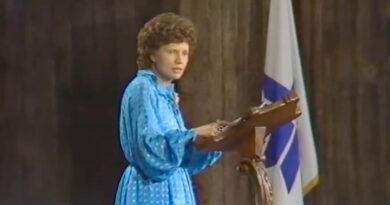
The Buddhic Essence, The Potential to Become Buddha, A Lecture by Elizabeth Clare Prophet, was given on July 3, 1992, during the Conference FREEDOM 1992: Joy in the Heart, in the Heart of the Inner Retreat, Montana.

Who is Gautama Buddha?
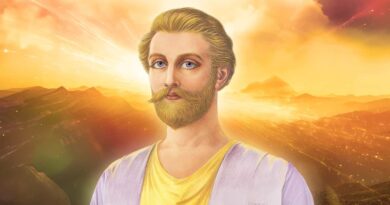
Gautama Buddha, the “Compassionate One,” holds the office of Lord of the World (referred to as “God of the Earth” in Revelation 11:4), hierarch of the etheric retreat at Shamballa (over the Gobi desert), where he sustains the threefold flame of life for the evolutions of Earth. Gautama (who was embodied as Siddhartha Gautama c. 563 B.C.), is the great teacher of enlightenment through the soul’s mastery of the Ten Perfections, the Four Noble Truths, and the Eightfold Path, and sponsor of Summit University and of the mission of the Mother of the Flame to carry the torch of illumination for the age.
Gautama came in an hour when Hinduism was at its worst state of decadence. The priesthood was involved in favoritism and guarding the great secrets, the real mysteries of God, from the people, thus keeping the masses in ignorance. The caste system had become a means of imprisonment of the soul instead of a means of liberation through dharma. Born as Prince Siddhartha, he left palace, power, wife and son to gain that enlightenment whereby he could give back to the people that which the interlopers had taken from them.
Wesak Festival
This celebration, known as Wesak, derives its name from the month in the Indian lunar calendar in which it occurs—Wesak or Vesak (Sinhalese), from the Sanskrit Vaisakha—corresponding to April-May on the Western calendar.
On this date, disciples and bodhisattvas, angels and elementals gather in a valley in the Himalayas to receive the benediction of Lord Gautama, as he addresses his disciples throughout the world, contacting them on the many planes of their evolving consciousness and blessing all life as his flame encompasses the earth. Some say that the Buddha is seen physically by certain adepts and devotees as he brings his “flood of blessing” to the earth.
CLICK HERE TO LEARN MORE ABOUT WESAK
Gautama Buddha – Eightfold Path and the Chakras
The first step on the Eightfold Path is to have right understanding, or right views. The second is right aspiration, right thought, or right resolve. Third is right speech. Fourth is right action, or right conduct. Fifth is right livelihood. Sixth is right effort. Seventh is right mindfulness, and eighth is right concentration, or right absorption.
These eight points of self-mastery are the endowment of your Holy Christ Self. Know this Holy Christ Self as your Real Self, and know your Real Self as possessing all of these attributes. Know that your Real Self has developed them to the full level of Christ-mastery and adeptship and is waiting for you to receive them.
As you put on these attributes in daily striving and attentiveness to the precepts of the Law, you are putting on the robes of righteousness of your True Self. You are putting on your deathless solar body, which Jesus referred to as the wedding garment. You weave this wedding garment by the practice of these eight right attitudes.
CLICK HERE TO LEARN MORE ABOUT THE EIGHTFOLD PATH
Dictations by Gautama Buddha
Listed Chronologically by Date Dictation was Given
January 5, 1962 | June 22, 1975 | July 16, 1978 | June 8, 1980
April 18, 1981 | January 1, 1982 | December 31, 1983 | December 31, 1984
January 1, 1986 | October 30, 1987 | December 31, 1987 | July 3, 1988
Books, Video and Audio Resources Available for Purchase
- Book: “Quietly Comes the Buddha”
- Book: The Maitreya Discourses – Teachings from the Mystery School (24 dictations on the Mystery School by Maitreya, Kuthumi, Gautama Buddha, Mother Mary, and Lanello)
- DVD Video: Teachings on Twin Flames – Lecture by Elizabeth Clare Prophet 7-5-82; dictation by Gautama Buddha 4-5-80
- DVD-MP3 Audio: A Message of Perfect Love – from the Heart of Gautama Buddha
- DVD-MP3 Audio: Class of Elohim for Turning of Worlds (includes Dictation by Gautama Buddha)
- DVD-MP3 Audio: Class of the Solar Ring (Gautama Buddha Release of the Thoughtform for the Year 1984)
- DVD & CD MP3 Audio: Mysteries of the Holy Grail, The Initiations of the Heart (includes Dictation by Gautama Buddha)
- DVD / MP3 Audio: Penetrating Power of the Word (includes Dictation by Gautama Buddha)
- DVD / MP3 Audio: Unite in the Heart Chakra of America (Harvest 2018 – includes Dictation by Gautama Buddha)
- 3 DVD & 1 MP3 Audio CD: The Sacred Fire in Winter – New Year’s Conference 2020
Learn more about Gautama Buddha at The Summit Lighthouse where you may find Books, Video and Audio recordings and more about Gasutama Buddha. What is the Keepers of the Flame Fraternity? Become a Keeper of the Flame.