On the Path with Saint Francis: Lecture on the Life of Saint Francis, June 30, 1978
On the Path with Saint Francis:
Lecture on the Life of Saint Francis
June 30, 1978
LECTURE TRANSCRIPT
Video Content and Timeline
00:00:01 Opening Title with Song 453 – Enter, Jesus and Kuthumi
00:03:59 Invocation
00:05:42 Lecture Begins
01:15:32 Song to Kuthumi sung
01:18:33 Lecture Concludes
01:19:16 Song 454 sung, led by the Messenger
01:22:18 Decree 30.11, Behold Love!. led by Messenger, 1x
INVOCATION:
In the name of the light of God that never fails, I call forth the light of the Ancient of Days. Beloved Lord Sanat Kumara, come forth now and kindle upon our hearts’ altars the flame of the living, the flame of life, which we have borne these thousands of years unto earth’s evolutions. Now expand the white light of purity from out the Great Central Sun, O God. Blaze forth thy light! Blaze forth thy light! Blaze forth thy light!
Expand, O threefold flame within our hearts. Consume the cause and core of every burden, of all hardness of heart and selfishness. Expand, O light of Helios and Vesta, the great wisdom‑love within us. Expand now, expand, and expand, O living light, that the God consciousness of the I AM THAT I AM may be upon us, may leap as the spark that leaps heart to heart the world around.
O Elohim, come forth, assemble with us. O Archangels, mighty Chohans of the Rays, stand forth now in the living praise of the light of freedom from within. In the name of the Father, the Son and of the Holy Spirit, and in the name of the Cosmic Virgin, Amen.
Won’t you be seated…
LECTURE BEGINS:
I say welcome, Keepers of the Flame, and hail, friends of Light! Hail, legions of angels who have joined us for our celebration of freedom.
We are being welcomed this morning by beloved Kuthumi, our own beloved Saint Francis, who comes to pass the torch of his own revolution and he comes to us in the secret chamber of the heart. I am very grateful that you could be here because there is quiet sweetness and a magnitude of strength in the life of Saint Francis and in the great Causal Body of Kuthumi in which we share today.
It is something which we need. It is a stillness in an age of agitation. It is a light and a brilliance that becomes the indomitable will, the indomitable energy that simply keeps on moving relentlessly as a great wave of light. It is a joyous consciousness, and within that joy is the pathos of the endurance within the body temple of world karma, personal and planetary karma, and yet the joy is never absent.
The conviction, the faith, the constancy‑‑all of the great virtues which our Ascended Masters, brothers and sisters of Light, have taught us are the requirements for the revolution. We find so often that the perversion of that revolution is a fanaticism and the dividing of the body of God East and West, left and right. And that division, together with the sense of competition, the sense of the self, and the sense of the enemy of the self, is a duality whereby you are divided and conquered.
And so we come from every spectrum. We represent the twelve solar hierarchies, and therefore in our positions on the great Cosmic Clock of being, each of us has a different vantage point of reality, a different awareness, a different observation. And so our report will be the report of the sacred fire where we stand even as we are distributed in this room so we each have a different vision of the living God.
So as we are positioned in cosmos, in consciousness, relative to the saints East and West, relative to our own inner light, this makes the body of God myriad gems of light, a great garment of light. The diversity, the ingenuity, the individuality, the genius, the freedom‑‑all of this we bring together and we become as the rainbow rays of God merging in the white light of the saints of East and West.
It is a joyous moment to be together under the tent of our God. It is a celebration now of two years here in Pasadena, and a preparation for moving on to a new highway of light. We have many challenges that face us which we will be discussing in our lectures, and you have been challenging many forcefields this morning with the science of the spoken Word.
I would like to read to you a little bit about the life of Saint Francis so that we can understand the price he was willing to pay for a revolution in higher consciousness. The price he was willing to pay, the price that he did indeed did pay is the price that we must learn to pay. And it begins deep, deep within the heart. It will begin within us, within that secret chamber of the heart because that is the place of our individual initiation under our own individual Christ Self and I AM Presence and the Gurus of East and West.
This makes of us a unique company because we are not so much attached to the outer fruit of action in terms of the struggle, the competitive sense. We are not moved up and down in the politics of pulling apart, of winning and losing, and the emotionalism involved, but we ride instead the light of the Christ consciousness and we see ourselves, individually, as the leaven in the Body of God. We are the living leaven that the Cosmic Virgin has placed in the Body of God, and it is the leaven of our consciousness which is the raising of life upon earth.
As I took up the newspaper yesterday morning, I was so impressed by the fact and I exclaimed out loud, “Why I can feel the Christ consciousness in the people of America in their reaction to the issues, in an inner awareness, an awareness that beloved Kuthumi gave to me. And he showed to me the great wonder of the science of the spoken Word, the wonder of the very presence of souls in embodiment who simply are thinking God consciousness, who have the awareness of a God consciousness, and this becomes a broadcasting station heart to heart.
This is what Saint Francis was. And it is important that we see that God picked him up from where he was, the son of a wealthy merchant‑‑he was born in 1182. His family name was Bernardone and his father was a clothing merchant, a cloth merchant. He led a boisterous and an indulgent life as a youth, and he used his money to pay for all the parties they held and so he was called “the king of feasts.” Today, he might have been part of the jet set, part of those who move in those circles where life has become the great game of human happiness.
I think that is very important as it always has been in our consideration of Francis because we realize that no matter where we are, where we have come from, when the Holy Spirit descends upon us individually, we are galvanized into the new person, into the new self. God will not have the old man. He must have the new. He will have the new in all of us; and therefore, whether we have been a playboy or whether we have been diligent in our studies or in our professions, there is a portion of us that must go.
And sometimes it is the image of the sinner that makes the greatest drama of conversion. But in fact it has been said that it is far easier for the conversion of a sinner because there is such a contrast between light and darkness. And so we find that the quote, “good people,” the religious people, those who are so called the righteous oftentimes do not realize that they have this intense need for conversion.
The dependency on human goodness or human badness‑this is what we must be delivered from–that dependency. And we cannot think that human goodness is a better means or instrumentation of conversion than human badness. But this pendulum swing of duality of the relativity must be broken by the descent of the Spirit. And this is what Francis experienced.
He went, he left home to fight in the war with Perugia in 1202, a warring city state next to his own, and was captured and imprisoned for a year. He spent that year in prison and upon his return, he still was continuing in his old pleasureful ways.
He was determined to become a knight. He heard the tales of King Arthur and the Round Table and the knights and the chivalry, and so he conceived of himself in the person of a knight. But as he was going to receive the necessary training, a mysterious voice spoke to him from within and posed to him this great riddle that our own beloved Christ Self poses to us: “Francis, who can do more for you, the Lord or the servant?” And Francis answered, “The Lord.” The voice said, “Therefore why do you leave the Lord for the servant and the prince for the vassal?” And Francis answered, “O Lord, what do you wish me to do?”
How important it is that we utter those words. The speaking of those words denotes that the surrender has already come. But when did it come? Most likely three or four seconds before. It came by the transfer of energy of the Holy Spirit as the Lord and Saviour Jesus Christ appeared to his servant Francis who knew not yet that he was his servant. But there was the instant soul recognition, “You are my Lord, what do you wish me to do?” It is the same prayer that Jesus spoke: “Father, if thou be willing, let this cup pass from me. Nevertheless, not my will but thine be done.”
O Lord, what do you wish me to do? Let us say it together in the name of Jesus Christ. [“O Lord, what do you wish me to do?” given 3x.]
And the Lord said, “Return to Assisi and what you are to do will be revealed to you there.” “Tarry ye in the city of Jerusalem until ye be endued with power from on high.”
Return to the city‑‑whether it is Assisi or Los Angeles or New Jerusalem or Chicago or New York–the city is the symbol of the center of power, the center of spiritual‑material power. There the nucleus of energy is responsible for the very growing up of city life and the people within it. God is sending us always back to the city, back to the citadel of consciousness, back to our own white‑fire core, back to the place of responsibility.
And where is the place of the responsibility? Where there is the greatest concentration of energy of light and darkness, where there is the greatest need, the greatest suffering, the greatest array of contrasts, as the Lord God, the Great Dramatist, always portrays his art in terms of contrasts. And so we are sent back with Francis to our karma, the place of our karma, the place of our dharma.
And so he returned. He became a very different Francis. He was quiet and serious. He knew the conversion of the apostle Saul on the road to Damascus. He had stepped into the very living presence of the aura of Jesus Christ, and that was enough to strip from him the outer layer, merely a patine over his soul of light, of the world consciousness.
We seek that conversion. We come together to stand in the very living presence of the ascended hosts of Light, in the very living presence of our Lord and Saviour Jesus Christ, of beloved Saint Germain, Mother Mary, Gautama Buddha, and all who have gone before us.
Why do we seek the conversion? Not for a selfish reason, but because we see the orphans of the spirit, the waifs of chastened ignorance. We see the human need. We see the human suffering, and we say, “I cannot alleviate that suffering. What can I do? I am powerless and therefore I need God. I need conversion. I need to be something more than I am, and because I see that suffering, I am willing to be converted. I seek conversion. I will pray and fast until I stand in the very living presence of the Lord God or one of his emissaries.”
The quiet, serious period of the path of sainthood is a prerequisite. You’ve experienced that at Summit University. You’ve experienced it in your own retreats and meditation. It is mandatory that we go within to the secret chamber of the heart, that we go within to the inner nucleus.
In the outer sense, we go to Assisi. In the inner sense, we must contact Alpha and Omega. We must know our Father‑Mother God as more than persons. We must know them as Power, Wisdom, and Love, as a very living presence, as the tender light of the Father‑Mother within us, a very nearness, a very accessibility of the Godhead.
Unless we go within and experience directly our mighty I AM Presence and determine to see God face to face, unless we cherish that unity with reality and put it first in the Coming Revolution, we will only be equipped with an intellectual understanding of the teaching or an emotional appreciation of the life and work of Jesus. And this will not satisfy us in the hour of our crucifixion. It will not, provide us with the mysteries of Christ, the mysteries of the Holy Grail that we need to know and understand to sort out light and darkness. And this comes to us in a mounting intensity in the very midst of world revolution.
He walked by the church, San Damiano, and the crucifix spoke to him. And you can go to Assisi today and that crucifix is there. These miracles are true, and there is no time and space. We can have the joyous expectancy of that communion today. This is our bread and this our wine.
Why was it the crucifix rather than an angel upon the altar or why was it in that form? Because it was the sign of the mission. This son of God called to pass through the fourteen stations of the cross, the path of the crucifixion. And so from the crucifix Jesus spoke to Francis and we can hear that call and that command as surely in this hour because it is identical: “Go Francis and repair my house because it is falling into ruin.” Repair my house.
We begin with the repairing of our own individual temple. We are the temple of the living God and we are in need of repair‑‑torn chakras and scars upon the etheric body and patterns within the forcefield unacceptable to the Holy Spirit who desires to descend into our midst.
The house of the Lord is found in church and state, and we see the cloven tongues of fire of the Holy Spirit coming right into the center of our congregation anointing us‑‑one to the Alpha, one to the Omega; one to the right, one to the left, as we are called upon to repair the house of God which is the house of Israel.
This is our passion. This is the intensity of our light. It doesn’t leave me day or night. I know it as I am sleeping. I know it in my waking hours. I know it in and out of the body‑‑this passion of souls of Light who are in this body and who are in other bodies of God, our fellow servants throughout the earth.
Because we have this passion of our Lord, we are willing also to experience that passion of the crucifixion because we know it is a means to the conference, the conveyance unto us of that mighty spirit of power whereby we become, whereby we become the true shepherds of the people, whereby the voice rings forth from us. It is heard, and it leads the people because they are compelled by the spirit of the Lord that is upon us.
The measure of our love is the measure of our power. Are we lacking in the power of the Holy Spirit? Then we have lacked enough love to surrender the human consciousness to receive that power. And so the equation of what we are able to do corresponds precisely to the sense within of our helplessness and our need to be God and our willingness to give this soul and temple to God, give it all that we’ve got because all that we have belongs to him–and life, my friends, is very short upon this planetary body.
And so Francis did not even understand what God meant, but he set about to do his heavenly Father’s business. He took a bolt of cloth from his human father, and he sold it. He presented the money to the Church. The priest refused it because he had heard that Francis had stolen the goods from his father in order to get the money.
Francis’ father pressed charges against him for the theft. Because Francis had taken the vow of the oblate, he was tried in an ecclesiastical court. Upon hearing the charges read by his father, Francis stripped himself of his clothing and threw them at the feet of his father. You can imagine this scene of townspeople, clerics, of professionals, and here the father is reading charges against his son for stealing a bolt of cloth. And the son says, “Here, I strip myself. Take what I have.” We see the element of the Great Dramatist [Audience laughs] in Francis himself.
Immediately the bishop walked over to Francis and laid his own mantle upon him. A very interesting thing‑‑it’s like the stealing of the blessing. You know the story of Jacob and Esau. Francis received the blessing of the Lord Christ through his bishop. Francis had received the appearance of the Saviour directly, and now the outer Church recognized him. The mantle of the bishop was laid upon him.
He gave up the clothing, the right and wrong of this world. And he was clothed upon with the mantle of the one who was anointed within the structure of Jesus’ Church. The case was dismissed because the money had already been returned to Francis’ father by the priest of the Church. Francis wandered around the countryside for a year clothed in tattered rags. He returned to Assisi and begged for lime and mortar to repair the church of San Damiano. That was his concept of repairing the Church.
It is our concept of repairing the Church. We have come to repair the Church and we have determined that the alchemy of the inner manifestation line upon line is matched by the outer building. The outer building–whether of the pyramids, whether of the temples dedicated to the sun in Titicaca or the great cathedrals of Europe–this outer building is an outer manifestation of the inner soul within the secret chamber of the heart.
It is a necessary alchemy. It is therapy, if you will. It is a must. We must daily see the fruit of our labor out of our hands as a sign and symbol of the inner labor of the soul. And we must see the balance of the Alpha‑Omega as the inner and outer of the Spirit‑Matter universe, and this balance of the Libra scales of the Father‑Mother God is the sign of this very year. Within and without, within and without, it’s the sacred rhythm of a cosmos.
He spent two years repairing that church as well as the Church of Saint Peter. He was received with great scorn by the people of Assisi, but he continued to pursue the Path that he knew to be his own. We see there a requirement for our own path of sainthood. The world has always scorned the Saint Francis, but when the Saint Francis in you reaches the zenith of that Christ consciousness in the stigmata, in the full glory of the risen Christ, then you become the hero and the heroine of the worldly consciousness that once was the source of persecution.
Each time we raise up a light, someone’s carnal mind is offended, aggravated, irritated and comes forth with a lashback of the Dragon’s tail. The question is: Do we have enough passion to be unmoved? The passion fails us without the inner experience, the inner conversion. We must meet that Lord on the road to Damascus, on the road of Assisi. We must cherish that experience, not as a human ambition, not as a spiritual or a material ambition, but we must know that we are waiting on the Lord day and night waiting to be endued with that power.
One day he was attending Mass and he was struck by the words of the Gospel giving the instruction of Jesus to the disciples to go forth and preach the word without possessions of gold or silver. And so they were compelled to go forth without purse, without scrip, having not an extra pair of shoes or an extra coat, and that became the great gospel of Saint Francis. It was another point of conversion. It was the conversion of action of the Holy Spirit.
This was the life we would live. This is what I want. This is what I ask. This is what I yearn to do with all my heart.
Filled with this message, he began the systematic ordering of his order. He began to preach simple words of penance and he received a revelation at Porzinuncula that he was to build the temple of God and to bring the message of men as Christ himself had done.
We read in the Bible that Christ did not fear to make himself equal with God; he did not consider it robbery to make himself equal with God. And you will notice that every saint who have, has ever lived and made it never thought it robbery to pursue the imitation of the path of Jesus Christ, to consider that that work and that mission in the fullness of its burden and glory belonged to him or to her. So as Christ had done, he would bring that message, that same message, and he would build the temple of God.
We somehow can’t quite imagine that something happening in 1210 [original delivery read 1120; correction made on published tape] is either real or relevant to the day. Yet it is so real; it is the real strength of our building.
Francis had twelve followers when he began. They came from the well-to-do families of Assisi; some that had been on the path of pleasure with him. They went to, it was in the spring, excuse me, of 1210, not 11 but 1210 that they went visit Pope Innocent the Third. And they were petitioning a papal sanction for evangelical poverty for the order. And he presented his rules written with few words and making use above all of the text of the Gospels.
The pope agreed to Francis’ proposal, but there was an intervention of the cardinals who later became Pope Gregory the Ninth because there was a dream. And the heeding of that dream became the foundation of Francis’ mission. He saw that in the basilica where it was tottering at its foundation, there came a poor man running up to prop it up with his shoulders, and he recognized this man as being Francis. And so the cardinal said to Pope Innocent, “If we reject the petition of this poor man with the excuse that the rule is new and too austere when he petitions us to approve a form of life that is in keeping with the Gospel, we must fear that we may displease the very Gospel of Christ.”
Francis did not fear the disciplines of Jesus Christ and you know when there is nothing left to condemn–either the Messenger, the Ascended Masters, their teachings, or all that is brought forth–the fallen ones will condemn, “There is too much discipline. There is too much austerity.” Francis had the same complaint leveled at him again and again by those within and without his order.
El Morya and Kuthumi and Djwal Kul teach us today that when you are throwing a spiral and hurling a ball of light that is going to accelerate for two thousand years, the initial thrust must be of a very intense magnitude because everything that happens after that initial thrust is going to be a deceleration as it comes into the plane of Matter. And therefore if we are not intense in the disciplines that are like unto the community of the Essenes and the community of the Holy Spirit founded by Jesus Christ, founded by the apostles, we cannot expect that those who follow us will be more intense than we are.
Always those who imitate are one step removed because this is the law of cause and effect and the law of cycles. And so the intensity of the white‑fire core here and in our Teaching Centers is held not in the sense of martyrdom but in the sense of the intense joy and the real understanding of alchemy and of the sacred fire that whatever we are, whatever we do is immediately magnified throughout the body of the earth and the souls of everyone upon this planetary body is, are waiting and watching for the coming of the saints robed in white, the coming of those who they understand are the first fruits.
There is a waiting and a hush in this period of the time of trouble. There is a waiting for the coming of those individuals who have the inner tie to God and who are not moved from that level of intense white‑fire purity. When it is broken by compromise and selfishness, this becomes then a wobble in the thrust, a wobble in the revolution in this giant sphere of God consciousness that we hurl. And so again it is for the greater love of those in need that we pursue our passion.
The Franciscan order was born, then, because the bishop was given a dream of this poor man who would prop up a decaying Church. We dare to da, dream. We dare to dream that very same dream in this hour, and we realize that the poor man really is the poor Christ within us. Poor because he is rejected by the world, a beggar as Christ is today, and we know that the beggar within us–even as Francis worshiped Lady Poverty–that beggar within us is going to prop up church and state as the movement of the Holy Spirit.
Francis and his companions made their home near a river, and it was a hovel in which these despisers of large and beautiful habitations sought refuge. Here they found shelter from the storms, for as Francis said, “One goes more quickly to heaven from a hovel than from a palace.” Then they were driven from their place by a peasant, and so they left the refuge peacefully and took the road to Porzinuncola.
They used that Porzinuncola as their home base for the next ten years, and continued preaching in Assisi. In the ten years the order grew from an initial twelve friars to three thousand in number.
And here it was that Francis and Clare had their first encounter. Francis had known of her and she was anxious to make his acquaintance. She was one of three daughters of a count, the Alfraducci family. They were known for wealth and arrogance. Her countenance bore the signs of this aristocratic lineage, but the pride of the aristocracy in her gave way to that utter humility which was the transfer of light from Saint Francis.
She came seeking to know how to live according to the Gospel. The great longing of all of our souls to live according to the rule and order and the love that Jesus Christ brought to us. And so Francis became the guru of Clare to guide her in the way of living the Christian mysteries.
She served in a novitiate under Francis for a year, and finally she was free from doubt and made her calling‑‑her calling and election sure. She ran away from home on a moonlit night, and with a friend headed toward Porzinuncola. The friars were waiting in front of the church with torches and singing, and they led her to the altar where Francis was waiting.
This coming of the soul to the altar before the representative Christ is always symbolical of the alchemical marriage, and the experience of that marriage which we must have lifetime after lifetime is the most sacred experience which we treasure. And as we contemplate it and as we have passed into this marriage many thousands of years, many times, we are utterly moved by the intense love of the beloved Lord, our own Christ, Jesus Christ, anchored in the one who has been our guru, our teacher in that life.
The very sense that this is the living God within that teacher, the sense and the understanding of this mystery alone is reserved for the saints‑‑the understanding of that mystical body that Christ was incarnate in Saint Francis and that because Christ was incarnate the full consciousness and authority of the Godhead was and therefore she could present herself the bride of that Christ through him.
She fell to her knees and consecrated herself to the Lord, vowing to follow him in poverty according to the rule of her teacher. She removed her velvet gown and satin slippers, stripped herself of all adornments and took on the gray religious habit tightened around her waist by a string, and a pair of wooden clogs. Her blonde hair was cut by Francis and covered the floor. She took a black veil for her head and went to the monastery of the Benedictine nuns into whose care Francis had entrusted her.
The next morning there was a violent knocking heard at the door of the monastory, of the monastery and members of the Alfraducci family had come to take her back. She ran to the church and hid clinging to the altar. When she heard her own family, she went to face them. She showed them her head, and they were taken aback. It was the light that had come unto her as she had become the vessel of Christ. And so in their astonishment in the very energy that came forth from her, they retreated and understood that she had made her vows.
Francis proceeded to take Clare to another monastery at Mount Subassio. Then Agnes, Clare’s sister, joined them, and she received her vows. And then they asked the bishop if the women of the holy order might be allowed to stay at Saint Damiano, the church that had been rebuilded by Francis and the brothers. The approval was given.
Clare’s other sister, Beatrice, came. Her mother responded to the call‑‑all of this by that action of conversion. As we are converted, we become the electrode and it is not by words or the intellectual or emotional understanding of the teaching, it is because we have become that teaching that souls receive the spark, the leaping of the flame.
In 1219, the cardinal approved the very strict rule in which Clare, faithful to the teaching of Francis, insisted. She insisted that the privilege of poverty be confirmed.
We must realize that this teaching of poverty given to us through Jesus is also the great teaching of Gautama Buddha. It is the teaching of nonattachment. It has been given to us by Saint Francis as he “has come and taught to us at Summit University, and he has explained is not whether one has material possessions or no material possessions, that the love of poverty is the absolute nonattachment to the things of this world, which was demonstrated in a very articulate concrete way in this order.
The promise of Jesus to those who leave all to follow him, in other words, those who embrace Mother Poverty, is that there shall be added unto them all of the abundance of the things of this world as well as persecution. And so we find that the more we surrender, the more we become stewards of that which we recognize belongs to God, belongs to the people of the earth. And so while we are in a sense of absolute nonattachment, we are surrounded by the abundant joy of the abundant life.
And because this flow, this immeasurable flow, keeps flowing through us we are able to “build my church.” We are able to build a Camelot. We are able to come together and have the resources to the publish the Teachings, to distribute them throughout the world. And so we see that we maintain the purity of the order of Francis and Clare even while we are surrounded by an abundance which is not a materialism, but it is the direct reflection in the Matter plane of the riches of the Spirit that belong to all who have this inner experience.
The friars were now a multitude, and Francis began to send them to other parts of the world in small groups. They went for France, Germany, Hungary, Spain, Morocco. Francis went to the Orient. And so it’s like every other mystery school: when the message is set, when the Holy Spirit has been given, when souls are truly the electrodes because they have the inner alchemical marriage, then they are sent forth even as King Arthur sent forth the knights to right social wrongs, to redress injustices, to let the kingdom of God come.
And so they went. They were the leaven. They were sown in the body of the earth. Their very living presence in those cities and nations was the lighting of a spiritual fire. But they preached the Word. They were impassioned. They preached it in the public squares. They begged for their food. They withstood the persecutions.
But upon their return, Francis was bitterly surprised. A group of friars whom he had appointed as deputies in his absence had tried to introduce innovations into the rules to temper the strictness of the vow of poverty. Some had even gone so far as to draw up a new rule.
This is the same vibration when Jesus Christ said to Peter, “I must be crucified.” And Peter answered, “Be it far from thee, Lord.” And Jesus spun on his heels and looked at Peter and said, “Get thee behind me, Satan.”
Those who look with the eye of sympathy that is the eye of the fallen ones ever feeling sorry for those who have set their hand to the plow will always try to take the light and teaching and introduce the path of ease, the path of compromise. They will say, “Oh, we accept Jesus Christ. We accept the teaching, but we will bring it to conformity with our age, with our decade, with the new morality, with the new theology, with a new translation of Scripture”‑‑always attempting to adapt the Word of God to the human situation instead of adapting the human situation to the Word of God.
This is the standard that revolutionaries in this age must raise, the non‑compromise of purity. And do you know that souls of light everywhere are hungering for those who have the courage to be individuals of non‑compromise. This does not mean that we are not soft and gentle and tender and compassionate and understanding of people’s needs and sorrows. One can have all of these just like the Holy Spirit, just like Jesus and still compel the souls of those who have descended to a standard of compromise to come up higher.
Francis went straight to the Pope. The Pope had approved the rule and now Francis wanted the Pope to confirm it anew. He was certain that Honorius the Third, the successor to Innocent the Third, would also defend his ideal and the rule of life which now served as an inspiration to thousands of religious.
The new Pope appointed Cardinal Ugolino as protector of the order and it was his job to settle any disputes that had arisen in the order. On the one hand there were those who in time would be called “the Spirituals,” who championed absolute poverty, opposed to those called “the Lassity,” who demanded a modification of the strictness of the rules.
Cardinal Ugolino, the future Gregory the Ninth, showed Francis the proper balance between the two forces. He led him to understand that the heroic period that had been proper at the start now had to be followed by reflection and organization; hence the rule had to be modified.
The strictness of Saint Francis was such that he desired not to own property, not to have libraries, not to own books, but the sheer message of Francis was on that tenth station of the cross, Jesus is stripped of his garments. That trial of the boy Francis before his father showed where he was. He was willing to be stripped of his garments, of all attachment, and he wanted to be that living example of purity to the end, and so he was.
We understand within the thrust of this dispensation again the Alpha and the Omega. We understand that in order for the order to be perpetuated at all it would have to have properties assigned to it and members within the order to care for those properties so that those seeking the austerities of Francis could have a haven and a home of light and so that over the centuries they could walk in his footsteps.
Francis, however, was passionately, passionately affirming that the rule must continue in its purified form. He could not accept the watering down of his teachings. He said, “Brethren, God has called me to follow the voice humility and he has pointed out to me the path of simplicity. I do not wish to hear any talk of any kind of rule either that of Saint Augustine or Saint Bernard or Saint Benedict. The Lord has willed that I be a madman in the world, and God is not willed to lead us along any other path save this one.”
As you know and can well understand, the evolution of our understanding of this path under the Great White Brotherhood is that God has indeed made us stewards and shepherds and trusted to our care not only thousands of souls but a place prepared the cradle in the manger, the printing presses, the buildings, the facilities necessary. We can live the purity of the life of Francis by the understanding of nonattachment. The realization that these are instruments to convey the piercing light, the uncompromising light that so long as people themselves must wear body temples that we also must be guardians of the Matter temple.
Francis was seized with a passion, and we within ourselves as we are a part of our community of the Holy Spirit are actually freer than anyone else could be either in the thirteenth century or in the twentieth century to do exactly what we did, because we have understood this balance to do exactly what we did because we have understood this balance of Alpha and Omega.
While all of this was going on the followers of, with the followers of Francis, Clare’s followers became numerous. There were women in the city who came to pray. There were those who joined the order-‑friends of her childhood, relatives. They took the vow of poverty. They gave their prayers at Saint Damiano and those prayers were given as the sins of past lives. It was the undiluted teaching of the Lord Christ concerning the balance of karma and the holding of the balance of the flame as the bearing of planetary karma for the world.
They took vows of chastity, gladness of spirit and worked without recompense. They nursed the lepers when hungry, because unlike the friars they were forbidden to beg for alms, and so they had to wait till someone decided to bring them food.
This we are doing because we see that we are feeding the spiritual lepers, those whose very bones are being eaten away by the corrosion of a generation of sensuality, of an absence of spirituality East and West. We see that people’s souls are sick. We see that the cancer of the body as ugly as it is to those of us who have witnessed it is far less in intensity to that of the ugliness of the cancer of souls.
We see a planetary body filled with people who have the cancer of the soul. We embrace them and as we embrace, the leaping of flame from our hearts is a transfer of energy for the cleansing, for the purging, for new life. Only the healing of God in us and God in them will restore them to their own vine and fig tree.
Francis and Clare were a living teaching. We come today that we all might realize the only effective service is that we be the living teaching. Francis withdrew from the day-to-day concerns of his order. He was forty‑two years old. He was tired and emaciated by his penitential practices, practices of penance. More than this, he was burdened because he bore the weight of world karma. He had illnesses and even his activity had come to a standstill. It had covered a brief span of fourteen years from the time of the approval of his order to the time of his retirement, from 1210 to 1224.
He felt the approach of what he called “sister death,” and he sought the silence of solitary places for which he had constantly yearned in the first years of his renunciation. He retraced his steps along the old paths between the mountains and forest, stopping once more in the cave which he had favored for prayer and fasting. These places are today famous as Franciscan sanctuaries.
It was on Mount Verna that what biographers have desired, described as the most important episode of the life of the Poverello occurred. It was the stigmata. There was a hut made of branches. It was built under a beech tree, and Francis beseeched Friar Leo to keep everyone away from that place. Here he spent the feast of the Assumption, the Assumption of the Blessed Virgin, August 15. And he continued to penetrate further and further into the forest toward the cleft in the mountain. It was Father Leo’s task to bring him a little bread and water once a day. In that solitude, Francis relived the moments of the passion of Jesus with such an intensity of love that he brought them to a vivid reality in his soul and upon his body.
He was in a state of ecstasy with God one morning as he was praying on a slope of the mountain, and he saw a vision of a mighty seraph with six wings resplendent with fire descending from the heights of heaven. When with his exceedingly swift flight he arrived in the air at a point near the man of God, the image of a crucified man appeared behind the wings. Two wings rose above the head, two others were spread as those poised in flight, and the last two entirely hid the body.
At the sight of the vision the servant of Christ was struck with a sense of wonderment and his heart was suffused with a joy mixed with pain. Upon disappearing, the vision left a prodigious ardor in his heart and imprinted upon his flesh a mark no less prodigious. Soon thereafter the signs of nails as he had seen them an instant before on that image of the crucified man began to appear on his hands and feet. On his right side he had the red scar of a wound as though he had been pierced by a lance. Francis came down the mountain thoroughly exhausted. The open stigmata on his body had revived all his afflictions and death was drawing near.
The prayer and the fasting and the meditation that Francis went through is not something reserved for saints of centuries ago. I wrote to you in my recent letter that I would be praying and fasting with you until we met our goal for today’s date. The experience that I had during this period, this extended period of fasting, was that first of all when it went on for many days, I lost all desire to eat, as I’m certain many of you have experienced. And as I was contemplating this absence of desire to eat, I realized that the desire to eat is the basic desire of life on earth because without eating we no longer exist in the physical body.
Losing the desire to eat, one becomes very easily able and capable of moving from this plane to another plane, one moves in consciousness to exalted states. But do you know what I found replaced the desire to eat? It was a great gift to me. It was simply the desire for Jesus, and that desire so filled my being that it became a spiritual ravening hunger. And unless I was crying upon the name of Jesus and conversing with him and meditating upon him and receiving his light I was miserable. Yet I never felt hungry in the physical sense.
And so the passion of Jesus, of the crucifixion and of those fourteen stations was very near to me. I could experience what he experienced because of the great desire that now filled my being because other desires had been quieted, the time came for me to take up strenuous duties that did not allow to continue fasting because I reached the place where I could not walk about anymore and therefore I was not feeling useful to the community, I had to invoke the desire to eat. [Audience laughs]
And I realized the desire to eat, being the desire to live, must be taken by the saints as a sacrifice, and that it becomes the dharma once again that the love for the children of God among humanity must exceed, far exceed, any other self love which you see can become a self love this meditation and this desire to be one in Jesus Christ.
That desire and that longing to simply merge into his being is denied its fulfillment until we have preached our Gospel to every nation. He said, “The end of your karma and your dharma will not come until this Gospel be preached in every nation.” The experiences of becoming one with the beloved in this alchemical reunion and going with Jesus as he takes us by the hand to the altar of Alpha and Omega is not lost so that when the period of fasting is concluded one retains this intense vision of having visited the Father‑Mother God, of having known the intimate walking and talking with the Lord.
I commend to you your own hour of prayer and fasting, but I also commend to you a very real sense of responsibility to retain life and balance in the body. You do not have to fast on water. You can fast on watermelon juice or other juices, whatever the fast of your choice, but you must be very careful, very, very careful because some have not done well on fasting. And beloved El Morya and Saint Germain have asked me to tell you that if you are going to fast for more than three days, that you write to me and tell me so, so I can support you spiritually and that you recognize that you may very well need to be under the care of a doctor or someone else if you are under extensive periods of fasting.
We do not fast because we are so intensely desirous of perfecting, ambitiously perfecting the health of the human body. The health of that body is taken care of by the great influx of light; and therefore, all of our fasting is a fasting of the human consciousness so that we may put on the fullness of the desire body of God. We don’t have to be concerned about the other because when we are centered on the passion of becoming God, God takes care of us. And of course we know that that cleansing is very important to our cells, the cells of our body temple.
The receiving of the stigmata may be given not simply on the physical plane. It may be had in the etheric body, and it may be received at inner levels because once it comes to the physical body, it incapacitates the one on the path of sainthood. One is weakened. One’s wounds must be dressed, and it becomes that flow of the blood every Friday or however it is that the Lord directs it. But the etheric stigmata is the sign of the path of sainthood and it is the sign that the individual is carrying the weight of planetary karma, that portion assigned to him, and because he is carrying the weight of that karma, he may receive the flow of the wounds of Christ which are the means of its transmutation.
And to the science of the spoken Word, when we invoke the violet flame that action of transmutation is stepped up and accelerated. So beloved Jesus desires you to know it is not necessary then that the stigmata descend to the level of the physical body. The cycles are shortened for the elect, and you may go through the Passion in the joyousness of victory and of world transmutation.
In 1209 Francis suffered from a general debility and weakening of flesh, but it was seven years later, in 1216, when he was sheltered by the Bishop of Assisi, that he had recurrent fevers. He had contracted malaria in his sojourn of the East–taking on the karma of the East he was bearing it out and working it out in his body.
This was the path of sainthood of these two thousand years of the age of Pisces before the coming of the seventh angel delivered to us the dispensation of the Holy Spirit, the violet flame. And so we see the saints that went before, suffered these afflictions in body‑‑the very literal working out of world karma. Today we may perform the same sacrifices with that violet flame. These afflictions of illness were added to the stigmata. There came pus forth from the opened wounds of the stigmata. He was pained dreadfully and continuously.
In the presence of that pain is bliss. I know. I can tell you. I have experienced it first hand. To the observation, to the observer it appears as pain. To the one experiencing this it is bliss, the most intense bliss of joy that takes place within the body, the soul and the mind. And therefore it is not to be seen as martyrdom but supreme opportunity. And the intensity of that bliss that you feel when you invoke the light of God, when you do your decrees is the sign or the pain of the world becoming bliss right where you are. And this is the message of the Coming Revolution that radiates and broadcasts from our auras. This intense message of bliss in the great ocean of God’s being. Bliss because energy is passing and flowing, and when God’s energy moves, it’s very movement is the consciousness of bliss.
Francis never gave into his sufferings. On foot, he traversed the roads of Italy, France, Spain and Egypt on foot with his illness and his stigmata. We see ourselves walking this path. We see ourselves with the most stupendous gift of the Holy Spirit able to bear it, able to be freer, and to do more because we live in an advancing age of higher dispensations. He went to Siena to spend the winter. His stomach, legs, feet swelled. The pain was aggravated to the point where he could scarcely take any food.
In that state he beseeched Friar Elias to take him back to Assisi, May 1226. Everywhere crowds gathered at his passage, and for this reason a secret route was decided upon. The procession at last reached Assisi and filed through the big gate of the bishop’s palace. Francis was to remain here for a time as the guest of the Prelate Guido, the same man who had covered him with his mantle in that now distant day when Francis had stripped himself before his father in order to wear the rags of poverty.
Francis was contemplating death, death as a point of transition, death as the hour of the soul’s accounting. He reviewed the events of the past years, the moments of joy in the grottoes, the solitary country places, the hard work of rebuilding Saint Damiano. The first followers, the approval of the Pope, the coming of Clare and the holy women, the disputes, the conflicts.
One of these precious moments is related as they came to a little town of Alviano where hundreds of persons were gathered in the square to hear Francis speak. You can think of Francis contemplating the joy of reuniting with his Saviour, remembering back upon this precious moment in the square.
Hundreds of swallows that nested in the city walls and the towers circled above the square, which resounded with their song. Francis waited until it was nearly nightfall, thinking that they would go to rest, but when they did not, he said to them, “My brothers and sisters the swallows, it is now time for me to speak. You have spoken enough.” Right away there was silence and it lasted while Francis gave his sermon. At the end of it, the swallows joined in the song of jubilation sung by the people of Alviano, who cried with one voice, “A miracle! A saint!” Then the bells in the church began to ring all by themselves and the people crowded around Saint Francis, asking to be admitted to his band of disciples, claiming that they were ready to abandon their homes and follow him.
“If these should hold their peace, the very stones should cry out.” And so it was fulfilled that elemental life were freed and gave praise to his heart flame. Where he felt that he was at the point of death, Francis asked to be transported to Porzinuncola so the life of the body should end where the life of the soul had begun.
During his last illness he felt a great need to sing and continually asked his attendant friars to intone the laudes and psalms. He composed the Canticle of Creatures as he laid on his palate suffering. When Francis arrived at Porzinuncola, he was almost at the point of death. In the cell that he was to take his last breath, he asked all the friars to assemble around him and placing his right hand on each one of them, he blessed all those present and those absent and those who had joined the order in the future until the end of time. We’re gathered today for the blessing of Saint Francis. We want to be a part of his order. We want to be his revolutionaries. We want to be his hands and feet. We want to offer him a new body that can bear the sins of the world and bear the cross, and he has come to be with us.
He was awaiting the arrival of a lady, Jacqueline of Settesoli, a Roman noble woman who was considered the mother of the Franciscan Third Order. It’s the order of the lay people. He had already sent his farewell to Clare and the other sisters.
The one final greeting which remained to be delivered was to his beloved bride, Lady Poverty, the person of Mother Mary whom he espoused as Lady Poverty. He celebrated it with a rite. He had himself stretched out naked on the ground and ordered the attendant friars to gird him with a hair shirt and to spread ashes over him. And while they tried to restrain their tears, he said to them, “I have accomplished my work. May Christ teach you yours.”
There is no sweeter transition in life than to be able say, “I have accomplished my work.” Jesus said the same thing: “I have accomplished the work which thou gavest me to do.” I do not have a sense that I have completed God’s work, and I don’t think you do. Everywhere around us we see challenge and opportunity and souls who need to be fed like tiny little baby birds in a nest who are helpless to get that food unless we bring it, and poke it right into their mouths. We see a helpless humanity. We know our work has barely begun, and it’s that zest by which we retain the desire to eat. [Audience laughs.]
Francis died on the evening of October 3, 1226, intoning with a thin voice a verse from a psalm: “Free my soul from prison so that I may praise thy name.” “Free my soul from prison so that I may praise thy name.” Was he seeking a reward? He wanted only to praise the name of God, praise the name I AM THAT I AM, praise the Lord Jesus Christ.
At that very instant a flock of skylarks soared above the roof as though to accompany the soul of the saint on his last journey. He was canonized by Pope Gregory the Ninth, but had he not done so he would be ever more canonized by the souls of Light, by the swallows, by the elementals and by Jesus himself.
There are many sweet stories of Saint Francis. Some are considered to be legend, but they’re well worth reading. They particularly include notations of how the brothers met face to face the temptations of demons and their blasphemies and their cursings and all of the types of consciousness of sin and of jealousy and of sensuality and of doubt and fear and all of these conditions of consciousness that come with seemingly a cyclical regularity.
And the brothers speak of this battle with the carnal mind, and they saw those demons, they saw the discarnates. Perhaps in their begging they never quite had enough food within them to dull their spiritual senses. But in any case they were spiritual aware that those who would be revolutionaries of God must understand that there is no let up in the battle of Armageddon. There is no let up. It is a way of life, a way of life, the carrying of the sword, but the joy, the joy of the victory ever present.
We’re going to meditate now upon a song to our beloved Kuthumi. [Song to Kuthumi sung.] Let us sing to beloved Kuthumi. Number 103.
I met someone in the world this week and my heart was singing the praises of Saint Francis. And so I was saying that I was the lover of Saint Francis, and he snapped back at me and he said, “Why should he be a saint?” And I said, “Why shouldn’t he? Why shouldn’t you be a saint?” And it seems that the objection to his sainthood was that there were many others who were worthy of sainthood. And I said, “Precisely what he came to teach us.” Why shouldn’t you be a saint? [Song 103 sung, led by the Messenger]
Please turn to 30.11 in the pink section of your decrees. We’ll just give the poetry alone to this decree. “Behold Love.” Together. [30.11 led by Messenger, 1x].
END
Dictation by Kuthumi, An Outer Order of the Priesthood of Melchizedek – June 30, 1978
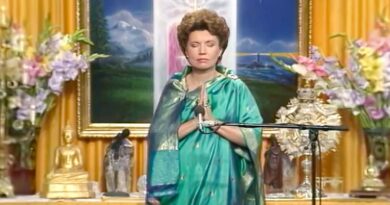
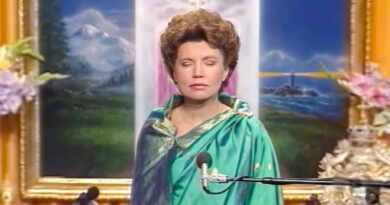
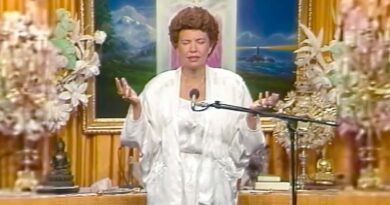
This Lecture On the Path with Saint Francis: Lecture on the Life of Saint Francis, was delivered by the Messenger of the Great White Brotherhood Elizabeth Clare Prophet on June 30, 1978 at the Sing a New Song! Conference in Pasadena California. This lecture was given just before the Dictation by Kuthumi.
Who is Beloved Kuthumi?
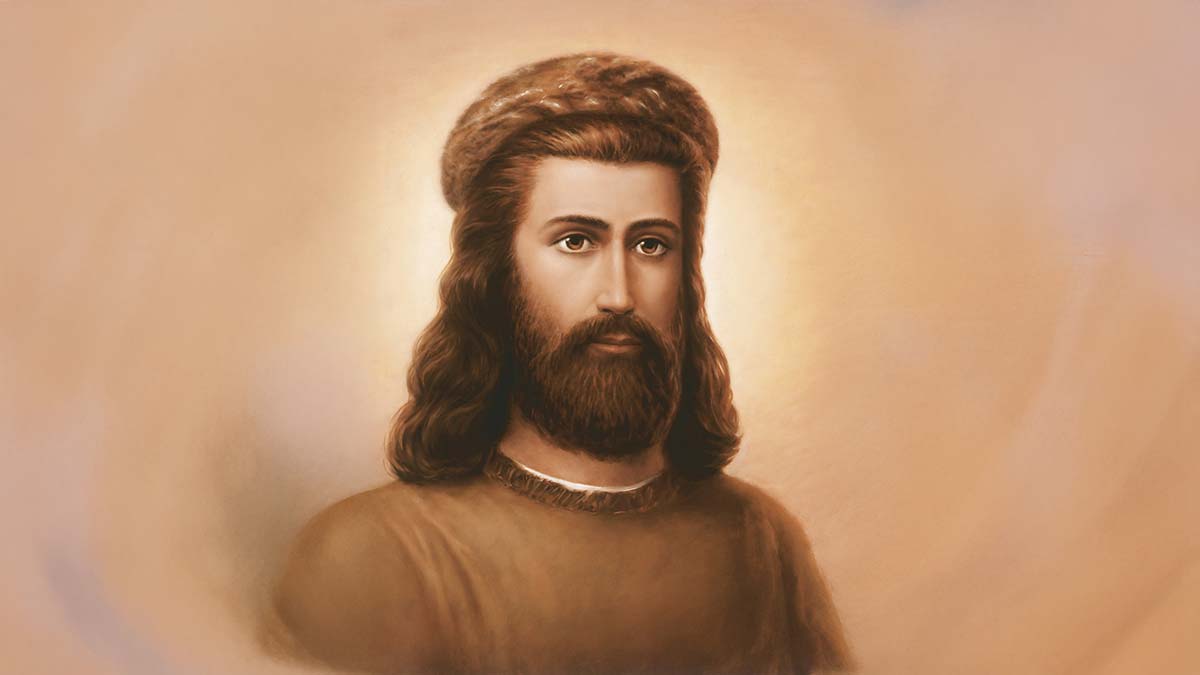
The ascended master Kuthumi, formerly chohan of the second ray of wisdom, now serves with Jesus in the office of World Teacher.
He is the head master of the Brothers of the Golden Robe and trains students who are on the ray of wisdom in the art of meditation and the science of the Word in order that they may become master psychologists of their own psyche, or soul.
Embodiments
Thutmose III
As Pharaoh Thutmose III (c. 1567 B.C.), greatest of pharaohs, prophet and high priest, patron of the arts, he is considered the architect of the Egyptian empire. He expanded the Egyptian kingdom to include most of the Middle East. His most decisive victory was on the battlefield near Mt. Carmel. There he led the entire army single file through narrow Megiddo Pass to surprise and defeat an alliance of 330 rebellious Asian princes—a daring maneuver protested by the pharaoh’s terrified officers. Thutmose alone was assured of his plan and rode ahead holding aloft the image of Amon-Ra, the Sun God who had promised him the victory.
Pythagoras
In the sixth century B.C., he was the Greek philosopher Pythagoras, the “fair-haired Samian” who was regarded as the son of Apollo. As a youth, Pythagoras conferred freely with priests and scholars, eagerly seeking scientific proof of the inner law revealed to him in meditation upon Demeter, the Mother of the Earth. His quest for the great synthesis of truth led him to Palestine, Arabia, India, and finally to the temples of Egypt, where he won the confidence of the priests of Memphis and was gradually accepted into the mysteries of Isis at Thebes.
When Asian conqueror Cambyses launched a savage invasion of Egypt about 529 B.C., Pythagoras was exiled to Babylon, where the prophet Daniel still served as king’s minister. Here rabbis revealed to him the inner teachings of the I AM THAT I AM given to Moses. Zoroastrian magi tutored him in music, astronomy and the sacred science of invocation. After twelve years, Pythagoras left Babylon and founded a brotherhood of initiates at Crotona, a busy Dorian seaport in southern Italy. His “city of the elect” was a mystery school of the Great White Brotherhood.
At Crotona, carefully selected men and women pursued a philosophy based upon the mathematical expression of universal law, illustrated in music and in the rhythm and harmony of a highly disciplined way of life. After a five-year probation of strict silence, Pythagorean “mathematicians” progressed through a series of initiations, developing the intuitive faculties of the heart whereby the son or daughter of God may become, as Pythagoras’ Golden Verses state, “a deathless God divine, mortal no more.”
Pythagoras delivered his lectures from behind a screen in a veiled language that could be fully comprehended only by the most advanced initiates. The most significant phase of his instruction concerned the fundamental concept that number is both the form and the essence of creation. He formulated the essential parts of Euclid’s geometry and advanced astronomical ideas that led to Copernicus’ hypotheses. It is recorded that two thousand citizens of Crotona gave up their customary lifestyle and assembled together in the Pythagorean community under the wise administration of the Council of Three Hundred—a governmental, scientific and religious order that later exercised great political influence throughout Magna Grecia.
Pythagoras, the “indefatigable adept,” was ninety when Cylon, a rejected candidate of the mystery school, incited a violent persecution. Standing in the courtyard of Crotona, Cylon read aloud from a secret book of Pythagoras, Hieros Logos (Holy Word), distorting and ridiculing the teaching. When Pythagoras and forty of the leading members of the Order were assembled, Cylon set fire to the building and all but two of the council members were killed. As a result, the community was destroyed and much of the original teaching was lost. Nevertheless, “the Master” has influenced many great philosophers, including Plato, Aristotle, Augustine, Thomas Aquinas, and Francis Bacon.
Balthazar
As Balthazar, one of the three Magi (astronomer/adepts) who followed the star of the Presence of the infant Messiah, he was said to have been the King of Ethiopia who brought the treasure of his realm as the gift of frankincense to Christ, the eternal High Priest.
Francis of Assisi
As Francis of Assisi (c. 1181–1226), the divine poverello, he renounced family and wealth and embraced “Lady Poverty,” living among the poor and the lepers, finding unspeakable joy in imitating the compassion of Christ. While kneeling at Mass on the feast of St. Matthias in 1209, he heard the gospel of Jesus read by the priest and the Lord’s command to his apostles, “Go, preach.” Francis left the little church and began evangelizing and converting many. Among them was the noble Lady Clare, who later left her home dressed as the bride of Christ and presented herself to Francis for admittance to the mendicant order.
One of the many legends surrounding the lives of Francis and Clare describes their meal at Santa Maria degli Angeli, where Francis spoke so lovingly of God that all were enraptured in Him. Suddenly the people of the village saw the convent and the woods ablaze. Running hastily to quench the flames, they beheld the little company enfolded in brilliant light with arms uplifted to heaven.
God revealed to Francis the divine Presence in “brother sun” and “sister moon” and rewarded his devotion with the stigmata of Christ crucified—the first saint known to receive them. The prayer of St. Francis is spoken by people of all faiths around the world: “Lord, make me an instrument of thy peace!…”
Shah Jahan
As Shah Jahan (1592–1666), Mogul emperor of India, he overthrew the corrupt government of his father, Jahangir, and restored in part the noble ethics of his grandfather Akbar the Great. During his enlightened reign, the splendor of the Mogul court reached its zenith and India entered her golden age of art and architecture. Shah Jahan lavished the imperial treasury on music, paintings, and the construction of awesome monuments, mosques, public buildings and thrones throughout India, some of which may still be seen today.
Koot Hoomi Lal Singh
In his final embodiment, the adept Kuthumi was revered as a Kashmiri brahman, Koot Hoomi Lal Singh (also known also as Koot Hoomi and K.H.) Koot Hoomi led an extremely secluded life, affording but a fragmented record of his words and works. Born in the early nineteenth century, Mahatma Kuthumi was a Punjabi whose family had settled in Kashmir. He attended Oxford University in 1850 and is believed to have contributed “The Dream of Ravan” to The Dublin University Magazine around 1854, prior to returning to his homeland.
His mission today
World Teacher
In the line of cosmic peerage, Jesus conferred upon the Ascended Master Kuthumi the office of World Teacher, which position our Lord gave to his disciple to share jointly with himself. The World Teachers Jesus and Kuthumi sponsor every soul seeking reunion with God, tutoring them in the fundamental laws governing the cause/effect sequences of their own karma and teaching them how to come to grips with the day-to-day challenges of their individual dharma, one’s duty to fulfill the Christ potential through the sacred labor.
Master psychologist
Kuthumi is known as the master psychologist, and his assignment is to assist chelas in the resolution of their psychology. On January 27, 1985, he announced a dispensation from Lord Maitreya:
This dispensation is my assignment to work with each one of you individually for your physical health and for the healing of your psychology, that we might swiftly get to the very cause and core of physical as well as spiritual and emotional conditions that there be no more setbacks or indulgences and surely not two steps forward and one step back.
Kuthumi has given a key to understanding our psychology in his teachings on the dweller-on-the-threshold and the electronic belt. The momentums of untransmuted karma in orbit around the “nucleus” of the synthetic self (or carnal mind) form what looks like an “electronic belt” of misqualified energy around the lower portion of man’s physical body.
El Morya”s Work with Kuthumi (Master K.H.)
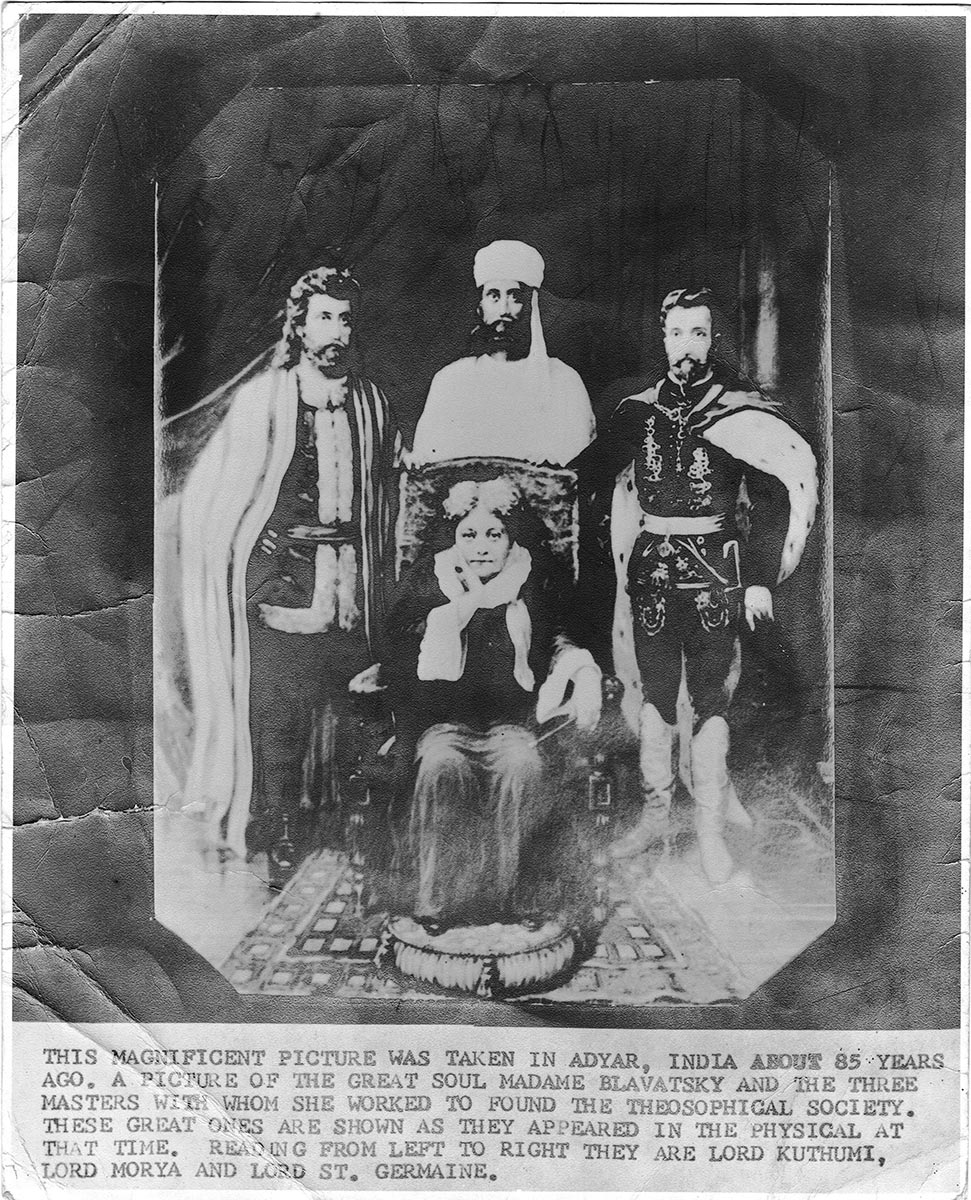
With El Morya, known as the Master M., Kuthumi founded the Theosophical Society in 1875 through Helena P. Blavatsky, commissioning her to write Isis Unveiled and The Secret Doctrine. The purpose of this activity was to reacquaint mankind with the wisdom of the ages that underlies all of the world’s religions, the inner teachings guarded in the mystery schools since the last days of Lemuria and Atlantis. This includes the doctrine of reincarnation—which, we note, Saint Francis preached in the village squares—as well as an understanding of the ascension as the goal of life sought knowingly or unknowingly by every son and daughter of God.
The Theosophical Society has published Kuthumi’s and El Morya’s letters to their students in The Mahatma Letters (link to The Mahatma Letters lecture by Mark L. Prophet below) and other works. Kuthumi ascended at the end of the nineteenth century.
El Morya ascended in about 1898 after his work with the Master K.H. in founding the Theosophical Society. El Morya has served tirelessly with Saint Germain in the cause of world and individual freedom, training public servants to externalize the will of God through God-government on earth.
LECTURE: The Mahatma Letters by Mark L. Prophet, December 28, 1969
The Summit Lighthouse®
Ascended Master Library
The Gold Mine Is Here
- Over 1300 lectures by Mark and Elizabeth Clare Prophet on angels, auras, healing and more
- Over 4100 dictations by the ascended masters on the spiritual path and how to attain your mastery
- Spiritual songs to the angels, ascended masters and hierarchs of the nature kingdom, violet flame, protection and healing decree services for your devotions, chakra alignment, karma balancing, aura cleansing and anchoring peace on the planet!
- Search by ascended master, date, category and more.
The Archives
For additional information please visit the Summit Lighthouse website. Learn how to become a Keeper of the Flame.